



Showing posts with label Sunday slave market. Show all posts

Wednesday, August 4, 2010

Chapter 31: THE LORD OF MISRULE


Tory awoke in the early morning to find the sun already creeping up, gilding the treetops, casting crisp shadows across the rocky ground. They had taken advantage of a dry spell to give Alphonse a turn alone in the wagon, and Jack was still asleep beside her, curled on his side with his back to her. His arm stretched off the pallet and out from under the edge of the sheer lawn netting that tented them. His head was bent forward on his arm, and a few heroic rays of the sun caught in his hair. Tory stirred the dark layers very gently with her fingertips, saw glimmers of black, cinnamon and silver as the strands sifted through her fingers, glittering like treasure.

"What is it...exactly...you’re doing, Rusty?" Jack murmured.

"Exploring." She pressed closer, still stroking his hair, and began to kiss the back of his neck. He tasted of salt and sleep and he lay still beneath her except to draw one slow, deep breath and then let it out again.

"Giving no thought to the...mmm...consequences?"

"I’m expecting them to be very severe," she smiled.

The night racket had fallen off to a low hum, and the morning was still pristine, sealed in dew, a gift not yet opened. Jack did not disturb it with any complaint as Tory stroked and nuzzled him.

"Are you sure you’re not part Indian?" she teased, nibbling at his ear. "Your hair is darker than mine."

"I suppose if they have Indians in the west of England, it’s..."

His voice trailed off into a sigh as Tory began to play her fingertips with cautious tenderness down his right side. A year after his beating, she knew his ribs sometimes still pained him. She let her hand dip inside his trousers, stroking very gently, and Jack’s next breath came out as a small groan of pleasure, very low, very soft. Tory pressed her cheek into his warm, scarred back and scooted herself closer.

Jack bore it for as long as he could, then rolled onto his back, caught her by the hips, and pulled her over on top of him. She propped herself up on her hands, and felt the soft netting against her back as she bent down to kiss him.

"You do realize I’m asleep," Jack murmured.

"Me too. Perhaps we’re only dreaming."

It felt like a dream, slow and steady and hushed. Tory closed her eyes, and felt as if she were floating in a warm sea, rising and falling with the swells out beyond the breakers. Gradually, the swells began to come faster and stronger beneath her, but she resisted as long as she could, enjoying the pull of the current, the raw hunger of Jack’s body for hers, after so long an abstinence; they had shared the wagon with Alphonse every night since Cybele and her children had moved into town. Now they rode the current together, crested at last, and broke apart, splintering like a million shards of sparkling glass, until she finally began to pool up again, safe and whole in Jack’s strong arms.

She lay there for a while, listening to his pounding heart. She knew she ought to get up and let him breathe; he was panting into her hair, his chest heaving under her. But he was still holding her fast. When she asked if he was all right, he laughed.

"Only don’t get too comfortable," he added, stroking her spine. "As pleasant as it is to wake up this way, it’s damned hard on the bladder. Not that it wasn’t worth it."

Tory rolled off of him, carefully and with great reluctance. Jack tugged up his trousers, clutching the fabric loosely round his waist with one hand, and shifted up into a wobbly crouch. Poking his head outside the netting, he glanced once at the closed door of their wagon—unusual for Alphonse to stay abed this late—and once at the Bruces’ caravan a few yards away. Then he bolted for the cover of the scrubby wood.

He made his way soundlessly between trunks of jasmine-laced evergreens and acacias, picking his way around thorny clumps of aloe as carefully as he could, given the circumstances. For all his eagerness in the heat of things, his side was still tender from his last encounter with Marcus, and his ribs were beginning to send out dull shockwaves of complaint. His limbs were sluggish and heavy with pleasure, difficult to manage in the thick undergrowth, but the need to relieve himself was obliterating every other sensation. The sun was high enough now to penetrate the wood with long, slanting beams of light, forcing him to creep deeper into the shadows.

It wasn’t until Jack had finally, gleefully emptied himself, and was buttoning up his trousers again, that he noticed a peculiar sound on the still morning air, not the usual drone of insects, but the murmur of human voices. Some random inflection, or perhaps the secretiveness of it, caught his attention. He grew still upon the instant, alert and straining to hear, turning his head slowly to catch the direction of the voices. What would anyone be up to at this hour in the middle of a wood? He thought of Tory alone at the edge of the clearing, and peered through the tree trunks until he spotted a human movement—the slow nodding of a dark head, the gesture of a white sleeve. There were two of them, not very far away, their stealthy movements just visible between the trunks and shrubbery; they huddled together in a guilty, furtive posture, speaking very low.

One of them was Alphonse.

The other was a Negro man Jack had never seen before, in the crisp white osnaburg rig and blue cloth cap of a well-kept slave. He whispered urgently to Alphonse, who nodded now and then in apparent sympathy, but without much enthusiasm. Jack couldn’t make out much of what was said and he was pretty sure he didn’t want to know. But he couldn't help but hear when Alphonse breathed out a weary sigh and said,

"Yes, I will come. I have given my pledge. Tell me where."

Then he and his companion retreated deeper into the wood.

Jack wished he had never left the clearing. He wished he was still tightly cocooned in Tory’s embrace, burrowing inside her, safe. He didn’t want to see this, didn’t want to think about what Alphonse might be up to out here at dawn, making promises to another man’s slave. There might be several explanations, all of them dangerous, most of them capital offenses, and none of them rendering up the slightest shred of comfort. Jack had thought he and Alphonse were on closer terms after their expedition to St. Kitts, but he'd told Jack nothing about this. The Lord of Misrule, Jack had once called Alphonse, turning the complacent, orderly world upside down. What travesty was he plotting out here in secret that was so dire, he would not even mention it to Jack?

Depressed, Jack slunk back the way he had come and found Tory curled up on one half of the pallet, waiting for him, her expression dreamy. He slipped in beside her and pulled her close, despite the dull throbbing of his ribs, taking what comfort he could from the warmth of her body.

"What’s the matter, Jack" she asked him softly.

"Nothing," he lied.


That evening, before they met the Bruces for supper, Alphonse told them he was called away on business that might require some time.

"But this is so unexpected," said Tory. "I hope it’s nothing we’ve done..."

"Oh, no, Victoria, how can you think that?" Alphonse looked genuinely distressed. "But it is the slow season, now. We can accomplish little at this time of year, and you do not need me when you play before the gentry. It is only that I need a...a holiday. To rest before the Bath Hotel."

The idea of Alphonse taking a holiday was so peculiar, even to himself, he could scarcely pronounce the word.

"You could take a holiday here," Tory fenced.

"I have other matters that need looking into."

"But where will you go?"

Alphonse shook his head, once. Tory felt chilled by the finality of it.

"I know I can depend on both of you to look after things here," he added, meeting her eyes again. Then he shifted his earnest glance to Jack, who nodded without a word.

"When will we see you again?" Tory persisted.

"It will not be long." Alphonse made a visible effort to brighten his expression, as much as was possible. "Are we not partners still? I will meet you at the Bath Hotel on the first of November. Not sooner, or the place will still be shuttered up."

"Make it the second Sunday in October at the Charlestown market," said Jack. "We’ll need to have a look at the stage before there are people about. And rehearse."

Alphonse nodded slowly. "I will be there. If for any reason I am delayed, proceed without me. I will send word soon."

He and Jack regarded each other for such a long moment Tory felt there was something they were not telling her.

"But of course, I will be there," Alphonse went on. "I always keep appointments."

"You will...look after yourself." Jack spoke, at last. It was more a command than a question.

"When will you go?" Tory’s voice was desolate. She had a sudden, dreadful feeling that she might never see Alphonse again.

"Tonight. I must stop in town first. I will leave from there."

When he came to squeeze her hand in farewell, Tory leaned over to kiss his furrowed cheek, commanding herself not to cry.

"Bon chance, Alphonse," she whispered.

He stepped back and showed her something like a smile.

"But it is not forever, Victoria. The second Sunday in October in Charlestown, on Nevis. We have a great deal yet to accomplish."


"Tell my fortune, Cybele."

"I thought you no want to know the future."

"I do if it's happy."

Cybele chuckled and Tory sighed. They were sitting on a quilt under Cybele's canvas awning surrounded by her herb baskets, but there was not much custom today, and the herb woman was idly shuffling her cards. It was Sunday, and Tory was visiting Cybele's stall at the market in St. John's while Jack and Marcus got in a little juggling between the showers that were falling again on Antigua. Without Alphonse, they had temporarily disbanded the pantomime, so Jack had Marcus out playing for whatever he could earn on his own account.

But without Columbine's antics to distract her, Tory found herself brooding. Alphone had been gone a fortnight now, and Jack's new enterprise among the gentry had her constantly on edge. When she expected her life ashore to be temporary, it didn't much matter which role she played, reinventing herself to fit the moment. But now that she had committed herself to the life she and Jack would build together, she was consumed with dread that Fortune would somehow retaliate for all the risks they were taking. Now that she had so much to lose.

"Do you think we're wise to tempt fate with our playing?" she asked Cybele.

"Tempt fate to do what?" murmured Cybele.

"To find us out. Have her revenge."

Cybele shook her head, practiced fingers sliding the cards over and under one another. "How can we know what fate intends?" she shrugged. "What we do in life touches other lives for good or ill, in ways we can never know."

Tory nodded emphatically toward the cards.

"You not in the proper humor," grumbled Cybele, still shuffling.

"What has my humor to do with it if it's all in the hands of the Great Mother?"

"You draw the cards, and it take all your strength of spirit to choose those with the most meaning," said Cybele. "Today, I think you only want to hear a pretty story."

"Yes!" Tory laughed. "Can't your cards tell me one?"

"You tell me one, cherie. What happen when you and Jack play for le bon ton?"

"They are scarcely the ton at English Harbour," Tory replied. "Commanders, post-captains, lieutenants—I'm getting an education in military ranking, if nothing else!"

She had been terrified at their first performance unmasked, at a small gathering of naval officers after dinner in the home of the Commissioner of the Dockyard. Jack had delivered Hamlet's "To be or not to be…" soliloquy, and then another scene with Tory as Ophelia in her dark green frock, her hair dressed beautifully by Ada Bruce. Jack’s amiable demeanor found favor among the Commissioner’s guests, and Tory’s nerves were taken for fetching female modesty. Asked how they happened to find themselves way out here in the colonies, Jack said they were touring the provinces until they could can command the experience to face a London audience.

"Indeed," a gallant young post-captain piped up. "And the very best of luck to you both, dear Miss Lightfoot and, ah, do forgive me, sir, but I am hopeless with names..."

"Dance," Jack smiled, accepting the officer’s handshake. "Jack Dance."

And as easily as that, Jack had written himself a new role to play in every parlor on the station.

"He charms them all, of course, when he wants to," Tory told Cybele. "He speaks their language. He says the more accustomed they are to seeing him as a harmless player, the less likely they'll believe any fantastic rumors to the contrary. And perhaps he's right. Everyone seems to take him for an English actor far from home."

"Not so surprising, since that is what he is," noted Cybele.

Tory blinked at her. Funny, she never thought of England, that far-off myth of a place where she had never been, as Jack's home.

"And what they take you for?" Cybele asked.

"Me? Jack's wench, I suppose."

"Jack nevah speak of you so," scolded Cybele.

"No, I'm always, 'my associate, Miss Lightfoot.' And then I must try to be charming, a far chancier proposition altogether." Then Tory dropped some of her cheekiness. "The fact is, they may think what they like of me, so long as Jack is safe. And they leave us in peace."

Since that first evening, Tory had also played Viola's comic duel with Jack's Aguecheek and Lady Macbeth to his Thane, although without the flying knives. Jack said they would bring out the pantomime again at Christmas at the Bath Hotel, and it couldn't come soon enough for Tory.

"Tell me what you see in the cards, Cybele."

The herb woman sighed and fanned open her cards, face-up. "Pick your card, cherie."

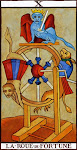
Tory selected her favorite, L'Etoile, the Star of hope with its female figure kneeling beside the river of life. She laid it on the quilt between them as Cybele set to shuffling the rest of the pack once more. When she fanned out the cards again, face-down this time, Tory touched one, and Cybele drew it out and laid it over the Star. She shuffled and fanned again, Tory chose another card, and this one Cybele laid across the previous one. Then she put aside the rest of the deck.

"This covers you," said Cybele. She slipped out the card covering the Star and turned it face-up. "Oh, la, la, do not look so, cherie. La Mort is not always so bad. One thing may end, another begin."

Tory tried not to shudder at the image of grinning Death, wielding his bloody scythe.

"The cards have no meaning today," Cybele went on calmly. "You no concentrate. Change in everyone's future."

"Well, what else?" Tory persisted.

"This crosses you," said Cybele, and turned up the card at right angles to the other two. "More change, and sacrifice," she sighed. "Not so surprising in these islands, eh?"

But Tory said nothing, eyes riveted to the image of Le Pendu. The Hanged Man.


(Top: The Lord Of Misrule, vintage woodblock, as seen on www.reason.com)

Wednesday, July 28, 2010

Chapter 30: HARLEQUIN FAREWELL


The summer rains came sooner to Antigua than expected. There was little custom on wet days at the Sunday markets in St. John’s. It was a sign, Jack supposed, that he must buckle down and work up some diversions for the Bath Hotel. It would be so important to succeed. And not only financially, so they could continue their more important work; if they were seen to be under the patronage of influential people, they might have less to fear from constables in the future as they plied their dangerous trade. Their safety might depend on how fervently the ton might clasp them to its bosom. But it would require a great deal of cozying up to the rich and frivolous, at which sport Jack was woefully out of practice.

He much preferred the company of Marcus. They were taking advantage of a dry afternoon after a drizzly morning to rehearse. Rain spent itself out quickly over Antigua, with no high, forested mountains to catch and hold the clouds, but showers came frequently and without much warning. Every moment one could steal out of doors was precious.

Jack was completing the second of three somersaults across the dampened ground outside the wagon when Marcus came careening into his right side, knocking them both askew. Marcus wasn’t heavy enough to do much damage, but Jack’s ribs took most of the impact; he had to stifle a sudden gasp as he sprawled over on his left side. Marcus, who had been turning cartwheels, easily disentangled himself as Jack scrambled up to his knees, fighting off the urge to seize his sore right side. It was the damp weather that made his ribs throb, Jack knew. How much longer he would be able to lark about like a boy?

"Sorry, Jack, but you say go on two," Marcus told him.

"I said three," Jack protested.

Marcus shook his head emphatically and held up two fingers, as if that proved all.

"Well, I meant three."

"You no teach me to hear what you mean, only what you say."

The spry boy was already up on his feet again. He offered Jack his small hand, and Jack felt like a feeble old man. Kneeling upright, he was just about eye-to-eye with the lad.

"Are you all right?" he asked, solicitously. "How’s your knee?"
Marcus had sprained his knee in the French islands, which had kept him out of their performances for a minute or two.

"Like it nevah happen," the boy crowed. He shook one supple young leg and hopped from foot to foot. "Cybele, her fix me up, for true. We try it again?"

Hellfire, the boy had joints of elastic, Jack thought, with an inward groan. So had he, when he was nine. Centuries ago.

"In a minute," he said, hauling himself up to his feet. "I thought Alphonse was going to join us."

Marcus made a face. "Him be off in the wood wit’ Calypso. Picking wildflowers."

Jack regarded him. "Alphonse is picking wildflowers?"

"No, him carry her basket for her. Ready?" Marcus was already in position to cartwheel again. Jack had an idea for a trick in which Harlequin and the little Pierrot Marcus played would come tumbling in from opposite sides and just miss each other. It was the near-miss they had not quite worked out, yet.

"Straighten your spine," Jack called, hoping to buy an extra minute to quiet his ribs. "Extend those arms. Like the spokes of a wheel." He crouched down for his somersaults. "Now, on three..."

"Halloa, Jack!"

Billy Bruce was descending from the door of his caravan across the clearing, then he turned to hand down his wife. Both were dressed in their most tasteful finery.

"Good evening, Captain," Jack sallied back, jumping quickly to his feet as they advanced upon him. "Mrs. Bruce. How splen..."

But he was interrupted by Marcus careening hell-bent in their direction, a whirlwind of flying feet.

"Whoa, whoa, whoa there!" Jack lunged forward to block the boy’s progress, dodging his feet to grab him by the waist, and roll him more or less upright. Out of breath and laughing, Marcus fell back against him.

"You say tree!" he gasped, giggling.

"I’ll deal with you in a moment, sirrah," Jack pretended to scold, holding the boy in a death grip against his own stomach, before he could get up to any more mischief.

"What a dervish the boy is," murmured Ada Bruce, with the practiced politeness of someone who has been obliged to admire too many other people’s children. She surreptitiously dusted her silken skirt with the fringe of her shawl.

"Mrs. Bruce, you are a vision," Jack beamed at her. "What is the occasion?"

"We’re off to dine at Dr. Fletcher’s," chimed in Captain Billy. "Capital old fellow, a dear friend of the Commissioner, you know."

"All the fashion will be there," Mrs. Bruce added, eyes alight.

"And I’m sure you’ll outshine them all," Jack told her.

"Oh, really, Jack..." she giggled, the color rising in her cheeks, and Jack could feel Marcus squirming in his grip.

"I’m told he’s hired a fiddler from the regimental band for the evening’s entertainment," Captain Billy continued.

"Is there often entertainment at these affairs?" asked Jack.

"Yes, at the very best dinners," sniffed Ada. "Otherwise, the men would play at that horrid hazard all night, and there would be no conversation."

"But are you not driving your caravan? It will be a dusty walk," Jack suggested.

"Oh, no, Dr. Fletcher is sending a carriage. Ah! And here it is!"

Jack and Marcus watched as a Negro driver in livery handed the Bruces up into a small barouche with a monogram on its side. Jack thought about how far the Bruces had risen in island society through their friend, the Commissioner. It was no wonder they chose to stay on here, season after season. In England, no player of their modest status could ever expect an invitation to dine with a well-placed gentleman. But things were different in the Indies. Captain Billy had just enough of a nautical background to win him friends on the naval station, and Ada was that most rare commodity in the islands, a well-spoken and attractive white woman. Jack could see what a coup it would be to have her at one’s dinner table in this bleak season, especially when the warships came in, with their weary officers pining for England and wondering how to pass the time. What else was there to do but attend dinners? Dinners with entertainments.

"Him must be mighty fancy buckra to keep such a carriage," Marcus observed.

"Fancy enough," Jack mused.


Alphonse Belair was not a man given to much easy sentiment. He felt things as deeply as any man, indeed he had cause for much deeper feelings than most. But he had learned early in life that the expression of fine feelings and noble sentiments would forever be denied him. He knew he was a ridiculous little man, and had learned to accept his fate, even revel in it, as it provided him with his living. And a good living it was, unaffected by blight, recession or any other random act of God, unlike most other West India incomes. He had no cause to curse his fate when so many others suffered far worse every day. And as a rule he had little patience for the occasional traitorous emotion that wormed its way into his heart.

But this was different. Calypso was a raw wound gnawing at his vitals. He could not look at her now without seeing Betsy's face, and recalling Betsy's fate. He could scarcely offer her the protection of a suitor; he knew his deficiencies in that respect. There was no point allowing himself to even acknowledge such useless, self-indulgent, distracting feelings that might endanger his purpose. And not only his purpose: Jack and Victoria put themselves at risk every market Sunday as well. Still, there was something he might yet do for Calypso, for all of them, four young people of color who had the rare opportunity to live free, thanks to Cybele.

Jack had given him the idea, with his provision for that fellow, Hannibal. For years Alphonse had kept a share of his personal profits in a fund established by Mr. Jepson. When the amount grew large enough, he invested it in one of Jepson's commercial voyages. Jepson’s markets in England were secure, and his captains prudent; he rarely lost a cargo or failed to turn a profit. Alphonse's usual habit was to siphon off a modest share of the profit to live on, and reinvest the rest in Jepson's business on an annual basis. But how much more useful the fund might be if he transferred it into Cybele's name.

Cybele was a prudent woman; she would not squander her profit. Better still, the investment could provide her with an income that would allow her to settle in one place for the two years necessary to establish her children as legally free. Calypso and the boys: four more lives to weigh against those lost at Whitehall. It was not enough, it could never be enough, but it would be something. He was equipped to provide a signature now, and a date, and current address to legalize the deed; all he had to risk was one more visit to Mr. Jepson's agent in St. John's.


When Tory climbed into the wagon, she found Jack sitting cross-legged on the bed, his Harlequin mask on the window sill above the bunk, and his volume of Shakespeare open beside him.

"All settled in, are they?" he asked, when she came in.

"Oh, aye. Edward upset a barrel of corn meal and the place was invaded by chickens. But once we rousted them out, Cybele brewed Mrs. Meade a restorative for her nerves, and all was set to rights."

"I miss all the fun," Jack grinned.

Cybele had accepted an invitation to remove herself and the children to rooms above a dry goods shop off the parade in St. John’s. The proprietor, a free woman of color who styled herself a widow, offered to board them in exchange for Cybele attracting custom to the shop with her herbal remedies and cards at this damp and unhealthy season. Tory and Alphonse had ridden down with them in the cart to help them settle in, but Alphonse said he had some business in town, so Tory had come back up the hill to report to Jack. She knew he felt guilty not coming along to help, but they were still leery about a former pirate exposing his face in a town with such a military character.

"How is it that Cybele always manages to insinuate herself into the life of the town, wherever we go?" Jack said now. "Even with those calamitous boys to herd about."

"She has skills to trade that everyone needs. As long as people are ill or injured or lovelorn, Cybele will always be in demand." Tory leaned over to kiss him, then perched on the edge of the bunk, glancing down at the open book. "Hamlet?" she asked.

"We can't play the Harlequinade for much longer at the market," Jack sighed. "People buy necessities in bad weather, from whatever dwindling supply the island has to offer, but they don’t linger to watch a performance. Besides," and his voice dropped low even though the clearing was deserted and the wagon door firmly shut, "it’s madness to encourage runaways in the hurricane season, with no shipping off the island. And yet, we shall have to keep ourselves until the season begins at the Bath Hotel."

"Doing what?" When Jack went to such lengths to explain a thing, Tory knew it was something she was not going to like.

"There is a market for entertainment that we've overlooked, here in St. John's. In island society, at the private dinner parties they hold for each other, and the officers from English Harbour when the fleet comes in for the season."

Tory looked at him doubtfully. "Dinner parties? Awfully close quarters for the pantomime."

He shook his head and glanced at the window sill. "I must leave my mask behind."

"Jack, you can't!"

"I’ll have the element of surprise on my side. No one will be expecting a pirate when they engage a player, and a player is all they'll see," he assured her. "We'll do recitations, comic speeches. A word to the Bruces, and I expect the Commissioner would have us in to a few dinner parties, to recite after the porter and cigars. And those guests might have us in to their dinner parties. There’s precious little else to do during the storm season, we might find ourselves in high demand."

"Higher than we bargained for if you end up swinging from a noose!" Tory exclaimed.

Jack took her hand as if to prevent her pitching any more abuse at him. "We must be seen in society, and accepted, if we are to continue the Harlequinade. Everything depends on the approval of the gentry, everything Alphonse has worked so hard for. And it's not just for the Harlequinade," he went on, more gently. "I need to do this for us, Rusty. This is no way to build a life, running away, hiding in shadows. Do you know, when I went to call on Mr. Greaves in Basseterre, I couldn’t even send in a name. His people would not admit me. It was only through the kindness of that dear man that I was able to gain an audience. I need to be more than Harlequin, if we are to make a life together. I need to know who I am."

Tory swallowed the rest of her protests; they burned like bile, but she knit her fingers through Jack's, marveling again at his gift for making insanity sound so reasonable. She supposed he was right, in an abstract way. At least she could not complain he was not ready to commit himself to their future.

"It's not you knowing who you are that worries me," she sighed.


(Top: Sunday Market, Antigua, 1806, by W.E. nach Beastall, as seen on http://www.kunst-fuer-alle.de)

Wednesday, January 20, 2010

Chapter 3: ENTER PUNCH


At first, no one realized it was a competition. Jack was too busy watching Tory, relieved that she was being so attentive this morning at the busy Sunday market, the day the slaves ventured down from the hillside estates to sell their own produce, livestock and wares on their own account. The marketplace was thriving with custom, but Jack noticed their audience thinning. Glancing off to see why, he spied a Negro boy just down the way, juggling. No, it was a small man in a white paste Punch mask, powerful arms and a muscular torso above short legs, juggling gaily painted wooden pins.

Damn the little fellow, could he not find some other corner in all the town? They could not claim the whole market for themselves, of course, but they had a right to defend their pitch. Jack concluded his trick with Tory, who spun around to catch the last ball and sank into a curtsy. Coins clinked into his hat as he handed Tory to her feet, showing her off.

When they were finished, the other fellow began a new trick, somersaulting four pins in the air at a time, two up, two down, as effortlessly as blowing kisses. Tory noticed him now, too, waiting until he finshed before she began again. Jack wished their gourds were brightly painted, but contented himself with tossing them in more elaborate patterns to Tory than any performer could alone.

By now, the two groups of casual spectators had stretched into a ragged half-circle facing all three performers, shouting out cries of encouragement or challenge. When their gourd trick concluded, and their rival produced rings, Tory signalled to Jack that he should continue without her, having already reached the limit of her skill. Jack delved into his memory for the most senstional tricks he had ever seen, or performed or could improvise on the spot, including throwing his knife with two of their balls, which drew a chorus of ghoulish delight from the crowd. But the other fellow responded with equal dexterity and invention. Jack‘s hand was on his razor to double the danger when he suddenly realized how winded he was; he was not a lad of fifteen any more. Tricks not done gracefully, with the appearance of ease, were not worth doing. His foster father had taught him that.

"Never beg your audience, lad," Old John’s soft Cornish voice advised him. "Do all 'ee can and quit when 'ee must, or you’ll lose their respect. And once that’s gone, there be no getting it back."

And Jack turned and made a sweeping bow of submission to his rival, who bowed graciously back. Jack knew he ought to be disappointed, but between the high pumping of his blood and the sudden, sweet memory of Old John, all he felt was exhilaration.

"If we are defeated," murmured Tory, passing nearby to pick up his straw hat, "why do you look so damned happy?"

Jack grinned, but could make no rational reply.

His grin dissolved when Tory returned with the straw hat and a perplexed look. Their take was small, for all his heroic efforts, just when he'd been feeling so pleased with himself. Then he turned to see the little black fellow standing before them. Hardly a boy, but neither was his an old face, despite sun-creased pockets under the eyes and furrowed lines on either side of his sober downturned mouth.

"Do you know Pugh’s Tavern, off the Bay Road?" the little fellow asked.

Jack nodded.

"Allow me to buy you dinner there in half an hour." Turning to Tory, the stranger added, "Please do not refuse, it will be my pleasure. We have much to discuss."


It was not a place frequented by the first class of white men, Tory observed, but it was too neatly kept to attract the commonest wharf rats. Most of the custom were freemen and women of color, merchants or shopkeepers. Some of them spoke to the little juggler in English or French, as he led Jack and Tory to a small table in a back corner, to which he responded with equal facility in both tongues, overlaid with a harmonious trace of island lilt.

"Alphonse Belair," he introduced himself, when they were settled. "I am very pleased to make your acquaintance."

"Your servant, Monsieur Belair," Jack smiled. "And may I present Miss Lightfoot?"

Belair took Tory's fingertips in his small, warm hand, and made a courtly little bow where he sat, across the table. "Enchante," he murmured.

Tory tried not to giggle over his solemn formality. "And this is my partner, Jack," she responded.

"Only Jack?" Belair frowned. "But that is a slave name." When Jack only shrugged, Belair sighed. "Since we are being informal, you must call me Alphonse."

"And please call me Victoria," Tory chimed in. Something about him encouraged her to produce her most civil, best-remembered manners. Such as they were.

"Did we not see you here in Basseterre last Christmas?" Jack sallied, as the boy brought the wine. "You were dressed as Punch."

Alphonse nodded. "But I did not see you."

"We weren’t performing, only watching. And a damn fine job you made of it, too," Jack smiled. "I’ve rarely seen the like, not in fifteen years at the fairs. You have a gift."

"Ah, but you have her," Alphonse nodded at Tory, who could only gape in surprise at the compliment. "But I fear we are working at cross purposes here in Basseterre," Belair went on. "Crop-over is a busy time. Most people have only a few moments to be diverted before they must be off about their business, and we offer them only confusion."

"Some customers who could not choose between us today kept their purses closed," Tory agreed.

"Or spent their coin wagering with each other on the outcome," Alphonse nodded. "If anyone is to profit by our skill, I believe it ought to be us."

"Aye, but what’s the remedy?" Jack said, on guard. "Surely you’ll not suggest that one of us forfeit?"

"Not at all," Alphonse replied. "I propose we join forces. Occupy the same corner, pass only one hat and divide the results."

"A partnership," said Jack.

"Exactly. A fellowship of colleagues. But one which may be dissolved at any time if it does not succeed, so long as we agree."

"I only wonder what you want with us," Tory ventured, "when you have cleary done very well for yourself on your own."

"Aye, that is puzzling," Jack agreed. "You scarcely know us."

"But you are too modest. It does me no discredit to work with such skilled performers."

Jack took no notice of this flattery. Tory watch as he and Belair regarded each other for a silent moment.

"I have many calls to make in Basseterre," said Alphonse. "If I am seen in the company of a white man, it will be...advantageous."

"I’ll not pass myself off as a slaveowner," Jack frowned.

"Nor I as a slave," said Alphonse. Leaning slightly forward, he added, "Only seem to employ me, as you do Victoria..."

"But I don’t employ..."

"People see what they like," Belair interrupted, with a wave of his hand. "And she is seen to be under your protection."

Jack’s mouth twitched. "You wish me to protect you?"

"I wish to travel unimpeded."

Jack had to swallow a laugh. "I’m afraid I have little influence with the law in these parts. Despite my obvious wealth and rank."

"But you have powerful friends," Belair observed, gazing into his wine. "Mr. Greaves sits in the island Assembly."

Jack was watching him keenly. "Mr. Greaves is Tory’s conquest."

"Conquest, rubbish," Tory injected. "The poor man is desperate for a sensible woman to speak to about his daughter."

She could see Jack wondering what Belair was up to. There was nothing but his color to suggest he had ever been a slave; indeed, his manner, speech and well-tailored clothing all denied it. He did not behave as if he had anything to hide, far bolder about his business than she and Jack dared to be. But it was the Indies. Color was a factor. It could be unfortunate for a runaway to ally himself with a couple of outlaws.

"You are not without papers, I suppose," Jack finally asked.

Alphonse reached inside his waistcoat and withdrew a small leather tube. From it, he extracted a scroll of parchment, which he rolled out on the table before them. It was a certificate of freedom, the ornate script a bit blurred in the printing. On the line for the bearer’s name, Alphonse Belair had been inked in. Beneath it was a crude 'X' and the notation, his mark. Various official-looking seals, stamps, and signatures in one corner identified courts and officers from the island of St. Vincent. The document was dated 1818.

"I am a free man," Belair told them calmly. "I am manumitted these seven years."

"I did have a reason to ask," Jack apologized.

"But I do not object to showing you this document. I am always happy to show it. I worked very hard for it."

"You manumitted yourself?"

"Fortunately for me, Victoria, I was very cheap to buy. As you see, I am only a poor cripple of no use in the fields. It was not worth keeping me for the slave tax I cost my master. But there was a price, and court costs, and then the fees to recognize the document."

"It must have taken you forever," Jack marveled.

"Ten years, beginning when I was a boy of six clowning at the Sunday market. But worth the trouble, no?"

He rolled the paper into its leather tube and slipped it back inside his waistcoat.

"Do you mind if I ask how you came by this trade?" ventured Jack. "Not the usual sort of thing to learn on a plantation, is it?"

Alphonse sipped at his wine. "There was a Negro watchman on the place when I was a boy, a man of middle years. As a youth, he had been sold to a troupe of players touring the islands. They took him back to England, where he became a clown at a famous London circus..."

"Not Astley’s?" Jack interjected.

"The very place. But he grew lame in the trade and had to leave it. He was a free man by then, but he had no more money to show for it than when he started out."

"Aye, that’s a player’s life, all right," Jack laughed.

"He came home to the Indies, to his sister, a cook on our estate who cared for him. He was a kind old fellow, full of stories. He taught me handstands, at first, to strengthen my arms, when I understood how little use my legs would be to me. And then the rest, when I knew I would need a living. A steady living, it has proved out." Alphonse reached again for his wine. "Which I look forward to sharing with you both."

"To partnership," Jack agreed, and he and Tory raised their glasses.


"Drink, Constable?" asked the Deputy Provost Marshal, rising to cross to the sideboard of his small office in the Court House.

"I am on duty," replied Stephen Raleigh, sitting straight in his chair on the far side of the Deputy Marshal’s cluttered desk. "Sir."

"Commendable, I’m sure," muttered the Deputy Marshal, pouring himself a generous tot of island rum. He came back to his desk, lowered himself into his own chair with an immoderate sigh and poked wearily through the rat’s nest of papers before him. Not yet forty, his thinning hair was already going grey, tufting up around his balding dome from the pressure of his recently removed cap. With his beaky nose and rapidly blinking eyes, the Deputy Provost Marshal looked like the bald, downy offspring of some grotesque bird. And his visitor wondered how a man in his position could allow himself to look so ridiculous.

Constable Stephen Raleigh glanced down at his own impeccable uniform jacket, his clean, crisp cap sitting on his knees. No one could have any cause to complain of his appearance.

"Ah, I have it now," said the Deputy, liberating a file of official documents from the jumble on his desk. "You are recommended for a promotion, I see, Constable Raleigh."

"Yes, sir."

"Mmm. The committee has reviewed your performance..." the Deputy mused, glancing through the papers. "Most zealous in the pursuit of runaways, I see. And in clearing the streets of illegal hucksters."

"More often than not they are one and the same."

"I daresay..." The Deputy’s tired eyes blinked laboriously across the pages. "But upon occasion, I see you have apprehended colored hucksters in possession of a valid license."

"These people have their place," replied Raleigh. "They must keep to it."

"Mmm, the market, yes..." The eyes blinked up at him. "But as chief constable, you shall be responsible for protecting the rights and welfare of all citizens. Including the coloreds. They can vote now, you know, Constable, and there’s talk of some of 'em being granted permission to stand for the Assembly."

Raleigh nodded, not trusting himself to reply. Bide your time, that was his motto, watch and wait. But, it galled him to think that damned mongrel race had wrested away legal privileges so far above their station, when there were white citizens even now who were denied the right to vote in spite of their pure complexions. And why? Because of their ignorant Papism. The damned, ignorant Irish, no better than slaves.

"We’re obliged to treat 'em fairly. Whether we like it or not," the Deputy coached him. "It’s the law."

"I am sworn to uphold the law, sir."

The Deputy nodded. "Your service record appears to be in good order," he continued. "Employed for some time as a member of the watch in Sandy Point Town and never once absent from your shift. Most dedicated."

"We were privately funded."

"Ah. And turned out several times with the island militia. I wonder, Constable, with Brimstone Hill so near, that you never considered a military career."

"I...have no interest, sir," Raleigh admitted. "I am an orphan." And he certainly did not intend to spend the rest of his life among the rank and file.

"I see. Island-born?"

"Yes, sir. I was raised at the charity school." Best not to seem ashamed of humble beginnings. A direct manner engaged sympathy and convinced one’s hearers one had nothing to hide.

"And...your parents?"

"I was...very young." But not so young he could ever forget the smell of sour ale and sweat and oily soap steam from the laundry they boiled themselves because they were too poor to hire a Negro laundress. Or the drone of Irish Jimmy Reilly in his cups, prattling on about the dream they would never live, the new life in the New World. The Irish had come to St. Kitts like the Africans to serve as slaves to the English, but James Stephen Reilly had never risen above it. At the end of his seven hard years of indenture, he was surprised to learn that no one would do business with a damned Papist who was a transported convict into the bargain. Disillusioned, without income, he gambled and drank away the last of his payment in sugar, with nothing to show for it but resentment and the brat he got off the complacent Irish Town slattern who took him in.

"Family?" the Deputy persisted.

"Dead, sir."

"Of your own, I mean, Constable."

"Oh. No, sir." He sat up to focus his attention. It was dangerous to let it wander. "I wish to establish myself, first."

"Very commendable. And...er, no other dependents?"

Stephen Raleigh’s posture stiffened. Colored bastards, the Deputy meant. As if he would pollute his own bloodline, the only asset he possessed, with some colored wench. Faith could be denied, names changed, but his white complexion at least was irrevocable.

"No, sir."

"Dedicated to your profession, eh?"

Raleigh remained still. Was he being made sport of?

"Yes, well, everything appears to be in order...oh, see here, Constable Raleigh, have a drink with me, there's a good lad. And top mine off while you’re about it, eh?"

Raleigh set aside his cap and rose, took the Deputy’s proffered glass and went to the sideboard. He stared at the decanter with a fixed expression, but he poured a reasonable portion into the Deputy’s glass and a much, much smaller splash into a glass for himself. The Irish drank. It might be a kind of test.

"Not a Papist, are you, Constable?"

He straightened, nearly dropping both glasses, or crushing them, his back still toward the Deputy.

"Sir?"

"Oh, just my little joke, Mr. Raleigh, too good to be true and all that. We shall have an opportunty to get better acquainted should your promotion come through. And I shall give it serious consideration, I promise you."

A small framed looking glass hung on the wall above the sideboard, and Stephen Raleigh found himself staring into it. The Deputy Provost Marshal was still seated behind him, fussing with his papers. It must have been a joke, after all. And then his gaze shifted to his own reflection. Neat brown hair, not too long. Plain, reliable face, not much given to color or emotion. Nearly thirty, nothing callow about him. A man of substance. A man of worth. There was nothing left of his father in his face or his speech or his manner or his heart. Not since the day he buried the old man’s cheap gilt crucifix, his only inheritance, and presented himself to the charity school with a more English-sounding name. There was nothing at all left of Irish Jimmy Reilly in his son but for those startling pale green eyes.

(Top image, Mr. Punch, by Lisa Jensen © 2010.)