



Showing posts with label sugar plantation. Show all posts

Wednesday, September 1, 2010

Chapter 35: THE MERRY GREENWOOD


It was too much to think about all at once; she would go mad. She must solve one problem at a time, Tory told herself, and keep going. Carrying Captain Billy’s coat and hat back to the Bruces’ caravan, she noticed a faint whiff of rum on the damp collar, and had her first inspiration.

"Jack is...indisposed," she told them, leaking just a trace of irritation into her voice. Neither of them had ever seen Jack drunk, but she dare not endanger them with the truth.

"Not seriously, I hope?" chirped Ada.

"Oh, a simple combination of heat and nerves, I suspect," Tory shrugged, in a tone that implied she was putting the best face on it. "But if he’s still, um, unwell by curtain time tonight, I thought you might like to have an extra routine or two prepared. Just in case."

"My dear, we are professionals!" Captain Billy declared. "We shall sing and dance until dawn, if that is what’s required!"

Cybele had taken the other children into town, to deliver some herbal remedies and fancywork promised to some ladies in time for the ball. But Tory saw Marcus under a stand of acacias with an open satchel of props, juggling furiously to an inner rhythm pounding away in his own head. The wiry boy had not grown much taller in these last months, but his trunk and arms and legs, once so thin, had thickened with noticeable new strength. Soon he would spurt up like Cully had, his limbs stretching to their full length. But for now... she stared hard at the boy. Hellfire, it might work.

"That’s fine, Marcus!" she called to him. "Do you know any of the Punch business?"

"Handsprings," he replied eagerly, "tree in a row! Me can somersa’t all round the stage, and juggle the bat and the club. And..." he hesitated for an instant, then his grin widened, "... me roll under you skirt and tief you big cookspoon!"

"Good," Tory laughed. "We’ll have to do twice as much tonight, if... until the others get back. I’ll come out and practice with you as soon as I can. When Cybele returns, ask Calypso to come see me."

She was sorting out costumes when Calypso found her in the wagon.

"Alphonse no return today," Calypso said without preamble at the door. "You know where he is?"

Tory measured her reply. "Do you?"

Calypso shook her head.

"Jack does. He’s gone to find him. Don’t ask me to tell you any more."

Calypso nodded and Tory held up the little Punch costume. "Can you alter this to fit Marcus? Can you do it by this evening?"

Calypso gazed at the little white tunic, with its flounced black edging and dancing bells, and at the short leggings.

"I can. But it no look like Alphonse."

Tory blinked. The alert girl was already a step ahead of her.

"If I tuck it in to fit that boy, it only show off how they be different."

"Can you pad it?" Tory suggested. "A little roll of scraps or straw sewn inside, to fill the chest and shoulders? In the trousers, just above the knees?" A little ox, that was how Jack had once described Alphonse, thickset and powerful in the shoulders and thighs.

"Yes, I tink so."

"Nothing heavy or awkward," Tory hurried on. "Marcus must be able to move. Only enough to—"

"Trick the eye," murmured Calypso, taking up the costume.

Tory choked down another wave of unease. This would never work. But it must, she told herself. Their audience would not expect to see anyone but Alphonse in the Punch costume, and Alphonse they would see. She would have to rehearse Marcus carefully in the padded costume, but he already knew how to work in a mask. Still, she must not let him try anything too dangerous that might injure him or give them away; no torches or knives. They were in no position to thrill a crowd, with their two daredevils absent. She had better come up with some knockabout comedy business, to take up the slack. Not that she was in much of a laughing mood.

Calypso retired to her sewing basket, and Tory pawed through the rest of their costumes. At the bottom of the pile was Jack’s patchwork Harlequin outfit, unused since St. John’s. Who among them could fill it? She lifted out the shirt and trousers, held them up, inspected them. She could still make out some faded rusty stains on the right side of the shirt, could see where Calypso’s clever fingers had mended the patches back together. With an effort, Tory forced the image of Jack’s beaten, bloody body out of her mind, and flung the costume into a corner. Calypso looked up, then away. But Tory continued to stare at its twisted rag-doll shape on the floor.

Then she retrieved her Columbine skirt and petticoat. There might be a way, after all, if she could only make it work. She must come up with the performance of a lifetime, for lives depended upon it, a triumph in the art of stage illusion. A quartet for two. If only she played bravely enough. And she reached for her logbook.


Jack kept Shadow to the high road, traveling due east, as they climbed into the foothills surrounding the central cone of Nevis. He knew enough to keep the silhouette of Saddle Hill well to southward, past a distinctive fork in the road Marcus had described, and bore away to the left above a ravine. The higher they climbed, the more relaxed the horse began to feel beneath him. These must be the back roads where Shadow had plied his trade as a cart horse in his former life.

When Jack reckoned they were near the borderlands of the estate he sought, perhaps even on the place, according to the signposts, he gave Shadow his head. Within moments, the animal turned off the high road for a hidden path through the wild scrub, just wide enough for a narrow cart. A path some wainman must have forged to hide his progress until he was ready to appear; Tory had told him how slaves cherished every moment out of their master’s eye. Jack was just as glad to stay out of sight of the main house and mill works now. He had already passed several carriages in the road, trundling down the mountain for town, but could not be sure the people from this place were among them. The sun had already passed its zenith as well, so the slaves were no longer in the fields, but were off enjoying their traditional Saturday afternoon holiday before the Sunday market. But where would they be? To what private place would they have gone to set their plan into motion?

The path wound through the brush, skirting wide, sprawling cane pieces. Most were fallow in this season, or just beginning to be holed and planted, while others boasted green cane as tall as a man, that had been too young to harvest last year. Soon, Jack saw the big house in the distance, and the mill works beyond, deserted at this time of year. Riding on, he passed above flimsy slave cabins, down in a gully. In the still, hot afternoon, he could hear the thin wailing of babies. Surely the plotters would not meet there, in the middle of the day, endangering their children.

The trail gave on to a stable yard, and Jack had to pull Shadow back into the protection of the scrubby woods, away from the cabins, up into the high ground, searching now for watchman’s huts or a patch of provision ground hidden from the estate below. He passed one dilapidated shack and a few tiers of vegetable plots; he must be going in the right direction. Then he came to the edge of a cleared, plowed field on a broad plateau, hidden from below by a dense treeline. The field was planted in all kinds of small food crops, but there was a path through the middle of it. Across the clearing, at the other end of the path and almost hidden in more leafy woods, Jack spied some kind of outbuilding. Long and low, like a barracks. Well hidden. Defensible. That was where he would plot, far away from any overseer’s prying eyes.

But he would have to cross the open clearing to reach it. He might search for hours to find a roundabout path through the increasingly steep and treacherous hills, and the dense woods, but he didn’t have hours to spare. Alphonse could not spare them. Jack reined in Shadow, and sat still and upright, peering across the flat, neat rows of the leafy green tops of root vegetables and long, flowering runners of beans and peas. He could not see any activity in the long, low building hidden in the underbrush, but he could sense it. That was where they were.

What if Alphonse had already taken himself away, possibly off the island? That would explain why he had not turned up this morning. Alphonse knew first-hand what a rising might lead to; the sensible thing to do would be to disappear. But if Alphonse were acting sensibly, he would never have become involved in this plot. What could have induced him to ignore his bitter memories of Whitehall to join another group of plotters? And in that event, what if he were still with them, now? If plantation families were already making their way into town for the ball, the militia might be making its way up the mountain at this very moment. Alphonse had failed at Whitehall by not warning the people in time that they had been betrayed. Jack could not make that same mistake.

Tory’s face swam suddenly into his mind, the way he had last seen her, tense, anxious, biting back words she dared not speak. He wished now that he had held her for a moment, coaxed a smile from her to carry with him now. That had been no way to say goodbye. But he shook off the thought before it paralyzed him. He could never have found Tory again if not for Alphonse. He owed him everything. And he nudged Shadow out of the cover of the trees and into the open field.


"But the Neck be too nearby," complained William Ibo, leader of the field gang. "Ol’ Mas’ take a fishing boat and come find we."

"If he has any reason to suspect you are there," Alphonse replied patiently. "Which he will not. He will assume you have all fled into the bush here on Nevis, and spend all of his time and energy trying to hound you out, again, while you are safe away on St. Kitts."

"Why we all no go direct to English Harbour?" asked Mama Lizzy, the hothouse nurse, sucking on the stem of her corncob pipe.

Alphonse glanced again at Paris, who looked back at him expectantly, like the others, as if he, too, needed to be convinced. Again. Even now, with the time so short.

"The military ships weathering the season there cannot absorb so many recruits, unless it is wartime. Send one or two of your boatmen to find work now, at the Dockyard, and they can help those who follow them later. But dozens of people appearing all at once, without papers and seeking passage or employment, will incite suspicion."

"The sooner away, the better off we be," muttered Paris.

"You will be away, in the safe places I have found for you. In the Neck on St. Kitts and other villages on Antigua, where there are people to help you. The people you place in the Dockyard now can report back as soon as shipping arrives in English Harbour bound for England. Or Cuba, or Jamaica, where there are large enough populations of free people to take you in. If only you wait—"

"We wait too long, already," grumbled William Ibo, and several of the others nodded in agreement.

"It is only a little while longer. And once you are off Nevis..."

A sudden, low thumping on the outside of the wooden wall cut short Alphonse’s plea. Paris sprang to the door and threw the bolt and in tumbled Remus, one of the athletic twins from the boiling house sent to keep watch in the brush, panting out a message.

"A buckra stranger in the woods! Him come this way."

The others were on their feet on the instant, crowding to the high, narrow window that faced the provision grounds, the only means of approach to this hidden storehouse.

"Where?" "Alone?" "Armed?"

The questions snapped at Remus, who could only splutter back that the fellow was on horseback and carrying no weapon that could be seen. The click of a musket sent a charge of ice up Alphonse’s spine. He had never contracted to be a party to murder, but these people were fighting for their lives now, not only their freedom. If they were discovered here in the thick of a conspiracy, it would be the gallows for all of them. He saw Henry, the senior watchman, prop the long snout of the musket on the window sill and sight down the barrel. It was an older weapon, the kind assigned to only the most loyal watchkeepers for scaring off pigs and cattle from neighboring estates foraging in the borderlands. But Henry had cleaned and cared for it and taught himself expert marksmanship. He drew a breath and the others breathed with him, hushed now, watching. The stranger was in sight. In another moment he would be in range.

Alphonse might have peeked out a knothole in the wall below the high window into the field, like the others. But he turned away.

"You do not approve?" Paris challenged him.

"Should we not find out who he is?" Alphonse suggested.

"No white man ride among us today of all days on any innocent business," Paris replied. "We have too much at stake."

Alphonse gazed down at his clenched hands, tensed for the report of the shot. What a hypocrite he was. How could he preach freedom to these people and not expect them to fight for it? What other choice did they have? And yet he was so thoroughly, bitterly sick of the killing...

Henry's finger stretched toward the trigger. But in the instant before he squeezed it, Alphonse heard the fragment of a song, incongruously cheerful, wafting toward them on the hot, still air.

"...and we will go to the merry greenwood
To see what they do there—O..."


"No!" Alphonse cried, bounding to the window, his entire body a clenched fist of furious strength. He slammed into Henry so hard, the marksman could scarcely hang on to his weapon, as the shot erupted high into the air. The singing stopped outside. Alphonse clambered to the window sill, and saw the familiar straw-hatted figure astride one of the draft horses halted in the clearing, and still sitting upright. Waiting. Then the others were grabbing at him, their faces seething with outrage.

"I know this man!" Alphonse exclaimed, rebounding on them all from the window. "He means you no harm. I stake my life on it."

"And our lives?" spat Paris.

"Yes! Kill me if I lie, but give him a hearing!"

Jack was still waiting outside. The wild shot had neither frightened him off, nor flushed out any unseen confederates from the brush. Everyone looked at Paris, whose eyes narrowed in angry frustration, but he nodded once to Alphonse. The little man stood up in the window and made a motion, and the stranger rode quickly across the rest of the field toward them.

"You are betrayed," Jack told them, when he had hidden Shadow in the underbrush and darted inside.

"At what?" asked Paris. "Tending our provisions on a Saturday afternoon?"

"The planters know of your plot here. They’re setting a trap. After they send their families to the ball, the island militia is coming back here to surprise you in the act. All of you."

A murmur of alarm rippled through them, but Paris’ scornful voice carried above the rest. "They nevah know to come here."
Turning to Jack, he added, "But you do." And he glared at Alphonse.

"Alphonse would not have confessed your plot to God Almighty on his deathbed," Jack retorted. "I found my own way here."

"A spy!" cried Remus. "Ol’ Mas' send him here to trap we!"

William Ibo, heavily muscled from the field, took a menacing step toward Jack. Henry was quietly reloading his musket.

"Hear him out," cautioned Alphonse. "You may kill us both if he lies, but you are all in grave danger if he tells the truth."

"What you hear?" demanded Mama Lizzy.

And Jack explained about the three men in the tavern, the blustery, impatient fellow, the reasonable, but sinister one, and the older fellow, melancholy and cultured, who must have been the owner. "I only wish there were some other way," Jack mimicked the man's weary voice. "Paris is like my own son."

There was absolute silence in the close, dark little room. Paris was staring at Jack with a molten mix of defiance and despair.

"If he keep his son in chains," Paris whispered in a voice as dry as scrub.

"Him be Ol’ Mas’ to the life," whispered another, staring at Jack.

"And Justice Shepherd," nodded William Ibo. "And the manager from Dunbar’s."

The plotters began to exchange uneasy glances.

"Who betray us?" Paris demanded.

"It doesn’t matter, they’re on your trail now," said Jack. "That shot won’t make it any harder to find you. You must disband—"

"No!" seethed Paris. "It be a plot to break us up! Because we be too strong. But they no keep us here, not any longer!"

There was some agreement with this show of defiance.

"It’s the island militia," Jack repeated emphatically. "Scores of armed men. Whatever you’re planning, you can not win. If you are found here together, you are all dead. Your only hope is to get back to your houses before—"

"Why should we trust the word of a white man?"

"Why would he risk his life to come here if he were not in earnest?" Alphonse countered.

"To defeat us!" cried Paris. "To destroy us!"

There were more voices seconding Paris’ now, and still others raised in anxiety and doubt.

"We are not a mob." It was Alphonse’s clear voice piercing the hubbub of confusion. "Leaders from all the gangs are present— house, field, kitchen, mill, boiling-house. We must vote what to do."

"I vote to stand and fight!" declared Paris.

"Fight?" echoed Alphonse. "This is not a rising!"

"Two years of my life I give to this plan. I work and study every day to free us from this place," Paris countered. "For what? Must I bide the rest of my life in Ol’ Mas’ house? Do all his bidding, fetch and carry, feed on his scraps like livestock? The son he treat like a dog? And all the time, I dress him in his fine cloting, watch him fatten on my provision at his table, hear how he speak to his guests about the right of a man to choose his master, profit from his labor, live like a man. But I be noting in this place. I have noting. My labor come to noting. Evahting belong to Ol’ Mas’ until the day I die. And I say sooner bettah than later. I no go back to live like a dog. I rather die."

"And how many others must die for your pride?" muttered Jack.

Paris’ clenched fist smacked like a shot across Jack’s face. "Buckra know noting about it!"

"I know that when the militia gets here, people will die!" Jack spat back, wiping blood from the corner of his mouth. "Don’t sacrifice yourselves like pigs. Think of your children—"

"Our children belong to Ol’ Mas to use as him please!" hissed Mama Lizzy.

"And our women," cried Remus.

"But will they be any better off without you? Don’t abandon them to make some futile gesture." Jack pleaded. "Your plan for today is exploded, whatever it was. You can’t save it. But you can still save your lives if you act quickly."

"I have seen what happens," Alphonse agreed. "Every man will have a musket or a pistol. Most will have horses. They are so afraid, they will run down anyone at all, man or woman or...child. They will not ask questions. Whoever is not shot now will be hanged later. I have seen it all before."

"And I see enough of this life to know I nevah return to it," declared Paris. "Who is with me?"

"Me bring too many of you into this world to see you shot down like dogs," muttered Mama Lizzy. She clamped her few remaining teeth onto her pipe and strode to the door.

"Me got a wife and pickneys to tink of," murmured William Ibo. "If we run off togeter, it be wort the risk, but me no see them killed for no reason." He shook his head. "Me go back to me cabin."

"Me fight!" cried Remus.

"And me," added Henry, cradling his musket in the crook of his elbow. "Not all the dead be black when this day ovah."

Most of the others elected to return to their cabins and slunk off through the underbrush without further delay. A few still wished to attempt an escape, and Alphonse lingered among them, describing the hidden bay where the boat would come and the safe houses to search for across the Narrows on St. Kitts. Jack waited in quiet agitation at the door, while Paris and his handful of defiant followers made their last, hasty plans. Then the door creaked open, and a breathless William Ibo poked his face back inside.

"Horsemen!" he hissed at them all. "On the Upper Round Road, only half hour away!" And then he was gone.

Jack caught Alphonse’s eye over the ensuing commotion. Those few still determined to flee thundered out the door, and melted into the bush. Alphonse grabbed his hat. But as Jack pushed the door open for them, Paris’ voice split the charged air behind them.

"Don’t go yet, buckra."

Jack turned at the door to glance back. Henry, the marksman, was standing with his musket leveled at Jack’s midsection.

"Do not be a fool, Paris," Alphonse hissed. "He came to warn you."

"And he still useful to us, Belair. His militia maybe no shoot so fast if we have a buckra hostage."

"It’s not my militia," Jack pointed out. "I doubt they’ll hesitate on my account."

"We see," shrugged Paris. The musket clicked again.

"But what use is a hostage?" protested Alphonse. "There are too few of you to fight. You cannot make demands."

"But we be heard, if only for a short time. Others will hear what we do. We will die like men, not dogs."

"Fair enough," agreed Jack. "If Alphonse goes now."

Alphonse turned to frown up at him.

"One of us must get back to the others," Jack muttered to him, "and it doesn’t look like it’s going to be me."

"He’s right," Paris said to Alphonse. "You honor your pledge. But this not your fight any more. Go." He nodded toward the door.

"But this is nonsense," Alphonse fumed. "The only useful hostage is one your enemy cares about keeping alive. Jack is only a player. He has no value to them, or to you."

"But for his white skin. It be very funny how they can nevah bear to see any harm come to one of their own."

"If there’s no performance tonight, we'll all be under suspicion," Jack whispered to Alphonse. "Tory can't do it all by herself."

"Oh, hellfire," muttered Alphonse, and pushed out the door.

He suffered Jack to set him up on Shadow’s back, to exchange their last, hasty, covert words. Hugging tight with his short legs, and leaving very little play in his grip of the reins, Alphonse kept upright as the horse carried him across the open ground and back to the hidden trail. Jostled along in the underbrush as the trail wound down its long, slow descent, he was roundly cursing every misfortune that had brought him to this day when Shadow whuffled and hesitated. Muted noises came from a gap they were passing in the scrub.

Alphonse peered into it and saw that they were on a wooded ridge some little way above an open road. A troop of militia was passing in the road below. And what Alphonse saw in their midst made him pull up and drag on the reins with all of his strength.

But Shadow only shook off this annoyance, and continued his dogged descent down the trail in an irritated trot, so that it was all Alphonse could do to keep his seat. It was beyond his power to turn the obstinate beast around. There was no way to warn Jack now.


(Top: Plantation Slave House, Surinam, 1839. Image Reference BEN-C, as shown on www.slaveryimages.org, sponsored by the Virginia Foundation for the Humanities and the University of Virginia Library)

Tuesday, May 25, 2010

Chapter 21: IN MEDUSA'S WEB


Boisterous laughter, fiddling, and singing erupted out of the waterfront tavern, drawing Tory along through the night shadows. She was near enough to see its fanciful wooden sign, swaying and creaking in the light breeze, a crudely carved figure of a mermaid with a head full of snakes, like the tangle of a spider's web. The Old Medusa Tavern, it was called, hard by the broad beach overlooking the bay. Sailors were notoriously loose talkers; if she was ever to find a ship to take her off this wretched island, it would be here.

It was typical of Tory’s recent fortune to find herself in Basseterre again, the last place on earth she ought to be. But the river had brought her to the southern coast, some little distance west of Basseterre, but considerably east of Old Road Town, and she didn’t think her scavenged food or her luck would last long enough for her to make her way to some friendlier town. Besides, Basseterre in crop time was the busiest port in the Leewards, and she knew the dockside area well, knew it was her best chance get back to the sea. How else would she ever find Jack again?

She had tried to close Jack out of her thoughts during her captivity; she would not conjure him up in that place to share her misery. But during the long nights on the run, and tense waiting days of her journey down the mountain, she had been able to think of nothing else. Not only the comfort of his warm, strong body, which she ached for every hour, but the solace of his companionship. And something much more—she hungered to be known, again, to be recognized for who she was. Not the prisoner, not the slave, not the runaway. So many people knew bits and pieces of her, by the patchwork motley she dressed herself in out of necessity in her erratic journey through life. But only Jack understood the whole of her. Only Jack could tether her to the truth about herself.

It was long dark by the time she'd ventured into the town and made her way through the back streets for the waterfront. She could see masts bobbing out in the open roadstead, their lights winking in the dark, but she dared not present herself to any honest captain, looking as she did, a mud-caked runaway in filthy rags with nothing of value to trade for her passage. But she might stow away aboard a vessel in secret; she’d done it before. Getting out of Basseterre was her first concern, she would worry about the rest later.

It was not impossible that she might work for her passage, female or no, once the ship’s master saw what she could do. A trader between the islands would be best, with stops in Nevis and Antigua, where she might hear news of the pantomime players. But any vessel would do, so long as it got her out of Basseterre and back on the open sea, where she could clear her wits and get a grip on herself. Then she could decide where to head next. Wherever Jack had gone.

She knew Chief Constable Raleigh patrolled the town in the daylight, but the nighttime belonged to the watch. What business would Raleigh have down by the docks in the dead of night? So she'd made her way through the shadows to the noisiest tavern, the Medusa, hoping to find out who was sailing where, and on what ships, and how soon. It should not take long to overhear what she needed to know. Anything worth hearing, she would hear there.

Tory turned down into the alleyway behind the buildings, keeping to the shadows. She felt in her dirty apron pocket for her last strip of salt fish. Remembering Alphonse’s advice about kindly kitchen women, she had gone begging last night to an old Negro woman tending a pot of cook-up at a cluster of slave cabins above the river. Tory said she was going to visit her mama in Basseterre without a ticket-of-leave, and the old cook took pity on her and gave her a small, precious ration of salt fish. It had been an easy lie to tell, and effective, for slaves often wandered off to visit their relations without their master's knowledge. Slaves accomplished a great deal, she was learning, without their masters' knowledge.

The abandoned little hut by the broken bush had grown close and sweltering in the heat of the day, but it kept Tory securely hidden until nightfall. On her second night following the river down the mountain, she found another shelter, a tiny lean-to hidden under a carpet of green moss and climbing jasmine. There were many such places hidden along the river route, if one had the wit to look: here an abandoned watchman’s hut inhabited only by spiders and lizards, there a hand-built shelter hidden behind the huge fan of a traveler’s palm, recently swept clean. She couldn't account for it. In the pirate trade, she would have called it Blesséd Providence.

She crept through the dark to the back of the tavern, where more modulated, businesslike voices hummed beneath the ongoing riot from the front. Some sort of meeting, she supposed, contrabandistas striking their bargains and getting ready to sail on the tide. She came out of the deepest shadows, crept up on the planked wooden porch to position herself closer to the jalousied windows next to the back door, where hushed voices and stripes of soft light filtered out between the slats. But the words were indistinct. She crept closer.

A sudden heavy tread shook the planks under her feet, and the door was flung open. Tory dodged backward into the dark as a cloaked figure stepped outside, but the shock of light behind him blinded her and she lost her footing. She tripped over a chicken in the dark who set up a fearful squawk, and stumbled backward into a cart in the shadows, with a thump and a rattling of traces. The man halted on the wooden porch, still framed in the light of the doorway.

"Who’s that?" he growled.

Tory wedged herself between the cart and the wall, but that damned chicken was still scrabbling about, clucking and complaining. Perhaps he would think that was all he’d heard. Any casual passer-by would let it go, the night was full of noises. But the man came out into the road, following the sound of the chicken, poking purposefully into the shadows. Some smuggler, no doubt, on the lookout for spies. Damnation. Could she possibly have any worse luck?

"You might as well come out of there," sneered a cold voice, and Tory knew her luck had turned worse. She could not run through walls or evaporate into the air. And as a hand closed on her arm and dragged her out into the pale light from the tavern door, she found herself staring into the scowling face of Chief Constable Raleigh.

"You!" gaped the constable, for an instant as shocked as she was. "What are you doing here?"

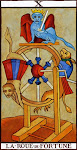
"I might ask the same of you," Tory snapped back, but the fight was already draining out of her, following the downward plunge of her heart. How could she have come this far, endured so much, only to have her last tiny scrap of hope so rudely ripped from her grasp? Which of the many gods had she so offended to deserve this punishment? But it scarcely mattered any more. Nothing mattered. Fortune had turned her wheel.

Raleigh had recovered from his surprise and was looking her up and down very keenly.

"Ye little bitch, you’ve run off, haven’t ye?" The most genuine smile Tory had ever seen him wear played across his face. "Why, there are very serious legal punishments for runaways, don’t ye know? It might be a hundred lashes. Or a branding. Or you might forfeit a foot, that would slow you down, eh? It’s all at the discretion of your owner," he leered.

Tory saw Rathbourne’s face in her mind’s eye, twisted with glee if he ever got his hands on her again, especially after he found his boots. Her legal owner, itching for his revenge. But she commanded her face to shut out all expression. She would not react.

"How I shall enjoy that particular entertainment when I take you back—" Then Raleigh paused.


Stephen Raleigh knew that damned Harlequin was still afoot, somewhere. And what of it? he argued with himself. The fellow had no legal means whatever of reclaiming his wench. But it was clear he had not found her, yet, for all his bold talk, judging from the state she was in. What could Raleigh himself do to ensure that he never did? Returning her to her owner was beginning to seem like a poor solution. These two were as slippery as shadows; that mountebank might yet help her to escape again and there would be all Raleigh’s effort wasted.

But suppose he could get rid of her for good and all tonight, even make a profit into the bargain? This harpy had humiliated him, ruined his finances, all but destroyed his career, she owed him that much. And suppose he could also guarantee that nigger-loving mountebank would never, ever see her again? Surely, that would break them both, the victory Raleigh craved above all others. That would cure their damned insolence, the pair of them. It was obscene, a white man making such a public display of his appetite for a colored wench, associating in public with Negroes, lowering himself to their level. And proud of it. The degraded fool didn’t seem to care who knew how deep he was in thrall to this...this...by God, just look at her! Covered in dried mud and tattered rags like something that had crawled out of a bog. What would make a man forfeit his dignity and betray his race to dally with such a filthy thing? He ought to give her back to him as she was, that would cure him of his affection. But a separation now, when the beggar thought he had almost recovered her again, that would teach him a lesson. His kind of behavior could not be tolerated in a decent society. Certainly not in any town run by Stephen Raleigh.

"But then, there are other punishments that might suit you better," he continued on, gazing at her again. "Not every slaveholder has a comfortable estate at his disposal. Some situations are far less...genteel. What would you say to a change of scenery? An ocean voyage, perhaps?"

The girl’s eyes rounded at him, filling with such tangible fear that Raleigh was startled—and delighted. So he had cracked her sullen mask at last, probed deeply enough to find her fatal weakness.

"Please sir, no," she gasped, her voice low and husky with terror. "Not the sea, oh please."

"'Sir,' is it? 'Oh please, sir,'" mocked the chief constable. "I’m afraid it’s a little late to be finding your manners."

Her face was growing wild with terror. The coating of mud made the effect all the more grotesque, a banshee, a gargoyle. Raleigh was hypnotized. Never, ever had he dared to hope for such complete despair.

"Send me back, whip me, chop off my foot, I don’t care!" she begged, in an utter frenzy. "But don’t put me on a ship! For the love of God, not the sea!"

His only answer was another grim smile.


Jack could not believe what the fellow had told him. He’d had a new colored wench, all right, calling herself Hecate; his book-keeper had bought her in Basseterre. But less than a month on the place, and she was gone. A damned runaway into the bargain, and he would have what she cost him out of the book-keeper’s wages, if not his hide.

That was the end of the conversation, and Jack turned away and walked back down the broad stone steps that led from the veranda to the road. He could feel the paper from Mr. Greaves inside his shirt, burning a hole in his heart. Here he had a legal document to claim Tory, or at least allow her to claim herself, and she was gone. She was a slave, a possession, how could she be gone? Why would she take such a dangerous step? Could she not have waited for him?

"You’re sure she’s not still about the place somewhere?" he asked Alphonse when they met again, further down the road, near the cook-house. Back beyond the great house, the mills were grumbling and the sugar works steaming away, turning the heavy air dank and sweet. In a little valley far below the road, there was activity in the slave cabins. It was midday, and the field hands were on their dinner hour, cooking and tending their kitchen gardens; a platoon of them had just marched off to their provision grounds. A middle-aged woman of color and a sullen girl came out of the cook-house carrying laundry baskets, to follow the wooden-sided aqueduct away from the road toward some hidden stream. Try as he might, Jack could not feel the spark of Tory’s presence anywhere in this place, yet everywhere he looked, he struggled to will her into existence. "They might be hiding her from me, if they’re so short of labor," he suggested.

"I spoke to several of the household," said Alphonse, shaking his head. "The last anyone saw of her, she had been summoned to the master’s chambers."

"The master?" echoed Jack, halting in his tracks. "That fellow Birney? If he’s lied to me—" and he spun around and took two angry steps back toward the great house.

"She never arrived," Alphonse interrupted, halting Jack again. "It was the young nephew that wanted her. The cook’s mulatto son is his valet. Tory never came to him. No one has seen her since." He shook his head again. "She’s gone, Jack. Gone these five days."

"But she can’t simply disappear," Jack protested. "Runaways... they rarely get very far, do they?" But he broke off the thought. He knew all about the dogs, the lashes, the brandings that were the fate of captured runaways; he could not seriously be hoping she were caught. But if she were not, how would he ever find her?

"Perhaps you should stay here," he told Alphonse, more briskly, trying to weave a scenario that would enclose Tory without harming her, keep her close until he could find her again. "I’ll return to town and stay near the Court House and the square. If she’s caught or taken into custody, perhaps I can intervene before she’s…" he paused, drew breath, "...hurt or punished. If she comes back here, you—"

"She may not come back," Alphonse interjected, with quiet finality. Jack blinked at him. "She may not be caught. There are... ways to get off this mountain. There are even ways to get off this island."

Jack stared at him. Alphonse returned his gaze, but there was something edgy and uncomfortable behind his black eyes.

"And go where?" Jack's voice was scarcely audible.

"Anywhere," murmured Alphonse, lowering his eyes at last, his expression grim. "She could be anywhere, by now."

Jack frowned. "How do you know this?"

Alphonse's eyes rose to his again. "Because I have helped her to escape."


(Top: The Old Medusa, by Lisa Jensen © 2010.)

Wednesday, May 12, 2010

Chapter 19: PALE HECATE


"I shall speak to this fellow," Jack declared.

"If you must, but wait until nightfall," Alphonse advised. "It is not safe for you to be seen in the street. If the chief constable discovers you at large in his town—"

"If I find he’s had a hand in this business, he’ll see more of me than he bargained for," Jack muttered. And how could it be otherwise? There could be no one else who harbored such a grudge against Tory who also had the authority to make her vanish so completely. No sign of her had been seen here at Pugh’s tavern, where he and Alphonse had taken a tiny attic room. The landlady at Mr. Greaves’ lodging house had not seen her about the town, nor had any of the vendors at the public market who had enjoyed their Harlequinade last year.

Alphonse had turned to his friend, Mr. Theophilus Jepson. A free gentleman of color, Mr. Jepson was a trader out of Basseterre whose white father had sent him to be educated in England, to make contacts in Bristol that would further the success of the family importing and exporting enterprise. Mr. Jepson had gone himself to the Court House on a matter of business, and searched the gaol as well, but could find no one answering Tory’s description up on charges or awaiting trial.

Jack was tempted to believe Marcus had got the wrong town, but that the boy knew Basseterre so well. It broke Jack’s heart to think of that stout-hearted lad clawing his way back to Charlestown with nothing but a gold coin and his own determination. And all for naught, now that the trail had gone cold. Until today. A drummer they'd once hired for one of their Sunday performances told Alphonse he knew a fellow who might know something.

"Do not waste your breath on idle threats until we understand what 'this business' is," said Alphonse.

"You’re right. That’s why we must talk to this fellow now."

Jack was on his feet, again, but Alphonse motioned him back down. "Wait here," he sighed. "Downstairs, in an hour. Not before. I will fetch him here."

Alphonse bent over to roll his trouser cuffs up above his bare feet. He had replaced his tailored jacket and waistcoat with a tattered old shirt Cully had outgrown with the sleeves hacked short. With his wide straw hat pulled low on his head, he looked enough like a Negro boy to be ignored in a crowd. Or so they hoped.

In an hour, Jack stood in the shadows just beyond the back stairs at Pugh’s, in the alley that separated the tavern from the mercantile shop next door. A Negro youth of about twenty stood before him. He had set down his iron cook-pot, empty now, but for a few sticky yellow clumps of the corn pudding the islanders called fungee, and the half-gourd he used to ladle it out. He must have had a successful morning huckstering at the Tuesday market.

"Me auntie, her cook fo’ the gaol house," the lad explained to Jack. "T’ree days and nights, they bid her make up a special plate and one gaoler, him boast it be fo’ a special prisoner only him may see. A woman, him say. On the fourt’ day, him tell me auntie no more special plate."

Jack frowned at Alphonse.

"There was a public slave auction held on that morning," said Alphonse. "I have found the bill."

He unfolded a battered paper, yellowing and torn in the corners from its posting, and handed it to Jack. It was a public notice of slaves to be sold and let at auction, with a date over three weeks old, already. Jack scanned down the list of female names: Sarah, 14, House Servant; Sheba, Washerwoman; Queenie, used to the Nursery; Nancy, Servant and Nurse.

"But this tells us nothing," he said to Alphonse.

"There be anoder woman in the yard," the youth went on. "Her put up too late fo’ the bill. That gaoler, him boast too much, me tink he tell a tale. So me go see fo’ meself."

"You saw her?"

"Me see somebody," the youth shrugged. "Her be no much to look at, fo’ true. Tall, light-colored gal. Hair in a state o’ confusion."

"In what way?"

"Long. All the time fall out of her pins. Me auntie say long hair be too much provoking."

"Did she speak differently than the others?" Jack pressed on. "Not island? Not British?"

"Her nevah say noting but ‘no,’ but when they ask her name."

"What name did she give?" Jack was clutching the paper so tight, he was near ripping it in two.

"Why, her give a comical name, Massa," the fellow grinned. "Hecaty, or someting such. Auctioneer, him say it two times, it be so comical."

"Hecate?" Jack echoed, his voice faint. Pale Hecate, queen of the witches in Macbeth. "You’re sure? It didn’t just sound like Hecate?"

Alphonse glanced up at him. "Nothing else sounds like Hecate."

"Someting such," the huckster repeated, blandly. "Me nevah hear such a name before."

"Do you recall what happened to her?" Jack was fighting to keep the tremor out of his voice.

"Her sold up t’oder side of the mountain, St. Peter’s parish, Mas’ Birney’s place. Poor, shabby place, evahbody say. Him book-keeper buy her. Me sell fungee to him driver."


"We must go at once," Alphonse fumed, half an hour later, upstairs in their room.

"Aye, but what are we to say?" Jack countered. "I’m terribly sorry, sir, but your new slave was sold you by mistake. Hand her over like a sport, won’t you? There’s a good fellow."

"Offer him the purchase price and something extra for his trouble," Alphonse replied, with forced patience. "Never have I met a white man so reluctant to use the power of his race. It is not a wealthy place. They will take your offer."

"I cannot buy her," Jack protested. "I can’t compromise her freedom like that."

Alphonse stared at him. "You do not believe her freedom is at all compromised in being enslaved?"

"You don’t understand, Alphonse. All she has ever wanted is her freedom."

"I understand," Alphonse said quietly. "Those of us born into slavery are not any better suited to it."

"No, no, you know I didn't mean..." Jack's voice trailed off, but he tried again. "For Tory...this is her worst nightmare. When I think of her alone, possibly in chains, possibly beaten, possibly...Christ, I’ll do anything to get her out, you know that. But she will not appreciate being owned by me, don’t you see? It would always be between us, always. She would come to hate me for it."

"Then sell her back to herself." Alphonse was still exasperated, but his voice had softened. "Can you not make some arrangement later, when the danger is passed?"

"I would never hear the end of it."

"Then for the love of Almighty God, go in secret and spirit her away!"

"Steal another man’s lawful property? Hellfire, Alphonse, you’re a revolutionary after all."

"These are desperate circumstances. And I know many people on this island who will aid us."

"But that would make her a runaway in fact. With a price on her head," Jack shook his head. "The next time some overzealous constable takes it into his head to ask for her papers, it will be perfectly legal—"

He paused, staring hard at nothing. Slowly, something began to kindle in his expression. Alphonse narrowed his eyes.

"What?" he demanded.

Jack glanced at Alphonse, his dark eyes suspiciously alert.

"Whatever you are thinking, I don't like it," grumbled Alphonse.


It was close to midnight when Tory slipped away. The gentlemen had retired upstairs and the last of the supper things were being cleared away to the cook-house for the kitchen girl to wash. While the cook and the houseman were gossiping in the corner, Tory stopped at the table to nibble her share of the scraps off the plates. She folded the last of Cook’s little spice cakes, a quarter of a round of flat cassava bread, and a handful of sweet pickled peppers into a napkin she had removed while helping Pearl bundle up the table linens. She was tempted by the last of the cold pork, but meat spoiled too quickly in the islands, even overnight. This would have to be preserved in brine and boiled in a stew. It would be no use to her where she was going.

It would not be difficult to get away. She was not in chains, after all, and there were scarcely enough slaves in the household to do all the work, let alone patrol the grounds. She stuffed her napkin of food into her apron pocket and picked up Rathbourne’s grime-encrusted boots. If the others took any notice of her at all, they would think she was off blacking them, or else keeping her appointment upstairs. Nothing happened in the household that the domestic staff did not know about.

As an afterthought, she picked up the tin slops bucket, turning her face away from the bitter stench of ashes from the cookfire mixed with the contents of the household chamber pots. She carried it outside, away from the lights of the cook-house, and down some little distance to the waist-high dung heap near the kitchen garden. She had no trouble finding it in the dark; the warm, acrid, festering stench of rotting refuse, animal droppings, old cane trash, and mould and mud from the stream nearly choked her. There were many such piles around the place, on every place, the entire island in ferment, all ripening up until they were ready to be carried in leaky baskets on the heads of field hands to fertilize the newer cane-pieces.

Tory poured the contents of her bucket onto the heap. Then, grasping the bucket by the rim with both hands, she hollowed out a little depression in the crest of the heap, picked up the riding boots and plunged them deep into the squishy, yielding muck. That’s what I think of your orders, Mr. Ratbone.

She put the bucket on the ground, carefully settling the handle so it wouldn’t clank against the side, and continued walking down the slope. There were lights on in the mill and the boiling house below and behind her, where the night shift of slaves were crushing and boiling down the newly cut cane. But the still house was dark as she passed above it; rum-making would not begin until more of the sugar was cured. A few tiny lights twinkled in the slave cabins, clustered far below the still house down in the valley, but no one would be out here to interfere with her at this hour. Keeping to the shoulder of the hill, Tory followed the wooden-sided aqueduct that snaked away from the buildings and down into the welcoming dark.

It was her first time off the estate. She had no handiwork to sell, and had not been able to coax so much as a single green shoot out of her narrow allotment of provision ground, so she'd not been able to obtain a ticket-of-leave to attend the Sunday market in town. She was not even certain which town it was that the slaves paraded off to with such anticipation before dawn of a Sunday. But she knew her way to the stream, and water running down the mountain would lead her eventually to the sea.

A nearly quarter moon had risen much earlier and disappeared behind a high ridge of trees, but Tory didn't mind the dark as she made her way down to the stream and followed the soft burbling of its course. She could see why the slaves relished their Sunday escapes. It was not the expectation of riches, for few but the most industrious of them ever returned with more than a few coins, or rations of the precious salt fish that could be put away and eaten in the hungry times. No, it was the escape from master’s watchful eye that was so exhilarating.

Then the sound of the stream faded to silence. Tory tried to make her way down to the bank to follow it, but the slope had become too steep and it was too dark to see what lay below. It might be a cliff, or treacherous rocks.

The night suddenly seemed darker and less friendly. Tory turned reluctantly away from where the stream had been, and footed her way through the brushy dark until she felt some kind of trail that seemed to head in the same direction. It was very quiet now, without the comforting sound of the water, but for the hissing and clacking of the night insects, and stranger, wild-sounding noises from the forested mountain above her. Passing through more cultivated land, she dodged ripe cane stalks higher than her head, and stumbled across muddy fallow pieces. Twice, she ran into boundary fences that tore at her skin and clothing; she had to wrap her headscarf round her hand and drag open a passage to climb through.

The squat, dark shapes of outbuildings loomed ahead. She kept to the underbrush and moved as stealthily as she could. But one of them must have been a kennel; unseen dogs set to howling as she passed, lunging at their restraints. If they roused their master, if they were loosed to hunt her down, she would be torn to bits. She began to run blindly in the dark, frightened now, but no less determined. Hearing a cackle of chickens, she perceived a pinpoint of light ahead; a house or cook-house, near a coop. Still keeping to the scrub at the periphery of the cleared land, she crept closer, away from the sound of baying hounds, toward the light, hoping to draw near enough to get a better view of the landscape and still keep herself out of sight.

"Who’s there?" an angry male voice cried suddenly, just in front of her. There was a rattle of tin, the deadlights flipped open on a hand-held lantern, and she fell to the ground before the beam of light could find her. In the same instant, something snagged her by the waist, and rolled her down a short slope, into a little gully in the bush. She did not have to be told to keep still. The beam of light slowly probed the darkness overhead, fanning first one way, then back again. Tory did not breathe for an eternity, until the light began to recede and the grumbling male voice moved off.

Slowly she drew breath again. And over the drumming of her own heartbeat, she heard someone else breathing hard beside her, felt the heat of another body very near. She put out a hand to prop herself up and get her bearings—and felt feathers. The flesh beneath was warm, but unmoving. She jerked her hand away.

"Fowl no talky, Missy. Him be Quashie supper. Noting fo’ to fear now."

The masculine voice was soft, lilting, persuasive. Hands gently prodded her elbow and nudged her up into a crouch, urging her to feel her way along the slope of the shallow gully.

"No harm, Missy, no harm," her benefactor murmured. "Follow the gully. Quashie perteck you. Quashie know the way. Nevah ketchy Quashie."

The gully began to broaden and slope further downward. Somewhere below, Tory thought she heard the soft, clear, happy laughter of water.

"Is that the stream?" she whispered. "Where are we going?"

"Hist! Quashie know, but him nevah say."

Down they went, following the gully until they came out in a little clearing on the bank overlooking the water. A stream no more, but a river. This was her way off the mountain.

A deep cleft in the ridge of mountains above the river cradled the last of the quarter moon. Its sudden light seemed as bright as a bonfire, and Tory turned to face her new companion. He was a wiry young Negro, holding a dead chicken by its limp neck. He was a little taller than she, and completely naked; his slender, compact body, black as the night, glistened with more than sweat in the pale moonlight. He shone like liquid.

"Goose grease," he laughed at her astonished expression, rubbing at his own shiny forearm. "Nevah ketchy Quashie. Him always slip away."

"You do this often?"

"When Quashie must eat," he shrugged.

Tory glanced doubtfully around the shadowy bush. "Do you live out here?"

"Quashie live evahplace. Jonkanoo, him live evahplace."

Her eyes darted back to her companion. Was the fellow mad?

"Got to pickle this fowl. But Quashie roast him joint if you be hungry." He held the chicken up by its neck, suddenly sounding very rational. But Tory was not hungry for food.

"I’ve got to get off this mountain," she told him.

He nodded vigorously and pointed toward the river. "Follow water, water find the sea. Quashie hear the drums. Quashie know the way."

He crouched down and dipped his free hand in the dark, sticky mud of the bank, then bounced up again, his quick fingers streaking mud across Tory’s cheek before she could jump back.

"Covah up in mud," he told her, waving his muddy fingers at her. "Too much greasy to ketchy, like Quashie. Dark as night."

He was sounding more sane every minute. Tory dropped to her knees on the damp ground and began to smear dark mud on her arms and face. She shrugged out of Pearl’s old jacket, rolled it in the mud and eased the cold, slimy thing back on. She smeared dark mud all over her linen petticoat and apron.

"Her go in the dark, like a shadow," the fellow chanted softly, as she worked. "Hide in the day. Jonkanoo perteck you."

"Hide where?"

"Follow the river. The drums say so."

Tory cast him another sharp glance as she straightened up. "I don’t understand the drums."

The fellow clicked his tongue and shook his head. "No mattah, no mattah. Quashie, him know the way. Follow the river to the broken bush. Her must looky hard to find it."

"Find what?"

"The safe house."

The moon had already slipped below the crevice in the ridge, but Tory’s eyes had adjusted to the dark by now, and she meant to be well away from here by dawn. She fished out one, then two of the little spice cakes, and gave them to her benefactor, whose dark face lit up like a sun.

"Quashie, him feast tonight, fo’ true!" And then he was gone.

It had been a long day and night already, but Tory knew she must get off this mountain and find some port town. She must get home to Jack. Mindful of the dogs, she kept to the edge of the water, wading onto the cold gravel under the surface whenever she could, to hide her scent. She passed a little watchman’s hut on a rise overlooking the river that appeared to be unoccupied; further down, she crept past another hut above the opposite bank with a light inside. Grey dawn was glowing behind a high, forested ridge on the other side of the river when she came to a little clearing. It was not a natural clearing; the brush had been hacked away with the clean, slanted strokes, probably from the kind of cutlass the slaves used to cut cane. One single shrub remained in the small, cleared half-circle, a green, little bush whose upper third was nearly severed from its thin trunk. Its little crown of dead, browning leaves hung forlornly on one side, resting on the branches below. A broken bush.

Tory peered into the scrub beyond. Behind two tree trunks and overgrown with bramble and trailing vines, she thought she spied a wooden wall. Making her way past the clearing, through the scrub and around the trees, she found a wall with a door. Bramble covered part of it, but when she tried it, it opened inward.

With the sky beginning to lighten behind her, Tory pushed inside, into a very small, dark hut with a damp, mouldy smell. The roof sheared downward on one side, under its dense crown of thatch, but the walls were solid. A wooden latch was fastened inside the door frame to shut out intruders. There were no windows, only a slit between two of the boards in the wall facing the river, and another lookout cranny in the opposite wall, facing what Tory supposed was the nearest cane country. The most likely directions for pursuit. Between the trees and the thatch and the bramble, the little hut was scarcely visible from outside. A safe house.

Rolled up in a corner, she found primitive bedding. The canvas pallet stuffed with what felt like dried plantain leaves was as damp as everything else, but the coarse blanket rolled up inside was dry enough. She spread them out in a corner, plopped down, and wrapped the blanket around her against the pre-dawn chill. She thought about nibbling some more of her food, but she was sinking too fast into the irresistible whirlpool of sleep. The very last thought that sparked in her mind was of a far-off day in Old Road Town, when she'd overheard Alphonse speaking to a black stranger. A safe house, he had said.


(Top: Sale of a Slave, Surinam, 1839. Image Reference H016, as shown on www.slaveryimages.org, sponsored by the Virginia Foundation for the Humanities and the University of Virginia Library)