


Showing posts with label abolitionists. Show all posts

Tuesday, February 16, 2010

Chapter 7: The Barracuda


St. John’s, the principal port town on the northern coast of Antigua, was not so bustling a place as Basseterre. But the very dullness of the place made the sudden appearance of the patchwork Harlequinade all the more of a sensation. Particularly among the homesick idlers with leave to visit the town, while their ships weathered the season at English Harbour, on the southern coast.

They had brought the wagon over on the barge from St. Kitts, camping in it at the edge of the open pasture overlooking the town where the public market was held. The island’s three main roads converged nearby, so they could keep watch on the traffic between the naval station and the town. Still, Jack kept to the refuge of the wagon. And since Cybele had stayed snug in Sandy Point Town with the rest of her children, Jack also kept watch over Marcus. Alphonse had warned of unscrupulous flesh traders who could profit from a healthy Negro boy on any estate in the Indies, so Jack kept the boy in his sight at practice, or when he was off scavenging about the marketplace after the stalls were taken off for whatever boyish treasures he might turn up.

Jack enjoyed their practice on quiet mornings like this, with Tory busy at her logbook and Alphonse off in town. But today was muggy and overcast with no trades to chase off the sticky heat. Jack’s shirt was soaked through in minutes and even Marcus was growing fretful. A gourd slicked out of the boy’s grasp and caromed down the hill into a stand of acacia trees. Jack scrambled down after it and when he drew aside one of the long, leafy branches that drooped almost to the ground, he nearly bolted out of his skin to find Alphonse sitting frozen beneath the hanging branches. He gazed up at Jack in solemn silence.

"Alphonse! Hellfire, are you unwell?" Jack gasped, struggling to recover his normal heartbeat.

"Unwell? No," Alphonse echoed. "It is nothing mortal."

His head turned away again toward the prospect of the town. The twin towers of St. John’s Church rose at one end, above a flat basin of orderly streets, municipal buildings and whitewashed townhouses. The bay lay beyond, a hazy blue-grey in the indifferent sunlight, dotted with small, steep islands and promontories. Three industrious Negro washerwomen were pummeling their master’s linen on the bank of a freshwater pond at the edge of the town. Alphonse saw none of it.

Jack crawled in under the shelter of the branches. "I thought you’d gone to town."

Alphonse only nodded. Jack noticed that he had a paper rolled open on his knees. Alphonse looked down at it, too.

"I was on my way," Alphonse's voice was without expression. "I am pledged to deliver this."

He handed the paper to Jack. It was a petition, two columns of neatly inscribed names and addresses. There was also an inscription at the top. Jack sat back and tilted the paper toward the light.

"We, the undersigned..." he muttered, his eyes quickly scanning through the script, "...free Persons of Colour of the Leeward Islands...loyal subjects of his most Royal Highness, King George Fourth of England…desiring to share in the Legal Rights enjoyed by all subjects of His Majesty, etcetera, etcetera…do pledge our regard for His Majesty’s sovereign Laws...and our opposition to the Abolition of Slavery..."

Jack stopped and looked up at Alphonse.

"Tell me I have misread it," said Alphonse, in that same empty voice. "I am not yet very skilled."

"Skilled enough. What are you doing with this?"

"I am pledged to carry it from the free people of St. Kitts to their fellows in Antigua, for conveyance to London. The first ships bound for England will leave from English Harbour when the storm season ends and I often carry such papers. Much is done through the writing of letters and the sending of petitions to agents in London, who lobby the members of the English Parliament on behalf of the freemen of color. But...never before have I been able to read what I carried. The ribbon on the paper came loose and I thought, who would be harmed if I stop a moment to improve my skills?"

"You mean to say that your associates, whoever gave you this..."

"I was told this was a petition in support of abolition," Alphonse explained in the same quiet voice. "I am betrayed."

Jack handed the petition back, marveling at Alphonse’s apparent composure. Ever one to mask his own feelings, Jack still supposed he’d rage like a lunatic if he ever found himself so deceived in a matter so close to his heart, as impotent as he knew his rage would be. There was something eerie about Alphonse’s calm, something infinitely more frightening than the heat of rage. For an instant, Jack remembered the silent purpose with which Alphonse had choked a man nearly to death in the hills above Old Road Town.

"But what purpose do they believe this will serve?" Jack asked.

"Their own," Alphonse replied. "For what other reason do men ever take action? The freemen no doubt believe that if they pledge to support the business of slavery, the English will be less afraid to grant them their own civil rights. Only cowards would stoop to it," he added, darkly. "Unscrupulous men and their credulous dupes."

"You can’t blame yourself, Alphonse. You couldn’t know..."

"But for my own common sense, which I chose to ignore. The freemen have no interest in ending slavery; they own slaves themselves. They might as well burn their own cane-pieces and plunder their own stores. I knew they did not share my goal, but I failed to see how determined they are to oppose it, now that they have throttled some few little rights of their own out of the English king. Such petty victories, Jack, you would laugh to hear them. The right to vote for the white Englishman to speak for them in the island Assembly. For some select few, the right to stand for the Assembly themselves, if they are white enough in their thinking to earn a grant from the governor. No one speaks of the right of the slave to be free. No one but the little fool they dupe to do their bidding."

"They can’t dupe you any more," said Jack.

"No," Alphonse agreed. "And I am very much afraid there has been an unfortunate mishap in the crossing." He gouged a little hole in the soft, damp earth with his heel and began slowly tearing the petition into bits. "It is always such a jumble at sea," he went on, his small, strong fingers working with precision until there was only a tiny pile of white parchment powder in the hole in the earth. He nudged the loose dirt over it and methodically tamped it down.

Jack felt his spine chilling at the utter composure of Alphonse’s fury, rivulets of sweat turning to ice against his back.

"What will you do now?" he ventured. "Sooner or later they must learn that their petition is not delivered."

"I suppose so," Alphonse nodded. "Although it will be no great matter to draft another one."

"Let ‘em do their own dirty work from now on, you’re well out of it," Jack agreed. "You can spend more time on the Harlequinade."

"The Harlequinade?" Alphonse sounded as if he'd never heard the word.

"Aye, we’ve still got a living to make. Tory, Marcus, we all need you. Your career as a messenger may be over, but there’s still plenty of useful work you can do."

Alphonse’s black eyes began to grow more thoughtful.

"Yes, that is so," he agreed. "My work is just beginning."


Even amid the slave vendors in their gaudy finest, heads turned when a trio of patchwork clowns and one small boy came tumbling into the Sunday market, behind a Negro youth slapping a drum strapped over his shoulder. Alphonse had engaged the drummer for the morning and curious vendors and customers blinked up from their business to hear it, following them with their eyes. It was a busy market; with no shipping out from Europe, the slaves’ provisions kept the town fed. Tory could feel an intensity of interest all during their performance, one of their typical comic stories about Harlequin and Columbine tripping up Mr. Punch in some folly, a riotous chase and the lovers’ escape.

"Must we have that confounded drumming all the time?" Jack grumbled later, when their drummer was off amusing himself. "I feel like I’m being marched to the gallows."

"It draws custom," replied Alphonse.

That afternoon, Tory was outside writing in her logbook while Jack, Alphonse and Marcus were poking about the wagon. The horse Calypso had christened "True," for his dependability, was cropping at the scrubby grass nearby when Tory looked up and saw the stranger.

"A good day to you, Miss, and a grand day it is!" the gentleman sallied, doffing his battered topper as Tory scrambled to her feet.
"Might I presume to introduce myself? William Bruce, at your service, Miss, although I am known to one and all as Captain Billy."

The man scarcely looked like a naval officer in his bottle-green coat and checkered trousers. Of middle years, his pink complexion did not look weathered and his cravat was tied with too giddy a flourish for a sober mlitary man. But Tory glanced off to see that Jack was still hidden behind the wagon.

"Captain," she nodded to his little bow. "I am Miss Lightfoot."

"Ah! The fair Columbine, if I am not mistaken? I wonder if you might conduct me to the proprietor?"

"Perhaps you can discuss the matter with me."

"The fact is, it’s a matter of some delicacy." Captain Bruce’s voice dropped so low, Tory braced herself for blackmail. What else could this brash fellow want with them, if he were not some mariner paid out of his ship in search of a quick profit?

"Perhaps I can help you," said Jack, materializing at Tory’s side. He was wiping wagon grease off his fingers with a rag, but his dark eyes were very keen. He was not wearing his Harlequin mask.

"Captain Bruce," Tory said, and Jack nodded at her inflection.

"Your servant, Captain. Please call me Jack."

"My pleasure, sir," beamed Captain Bruce. "The juggling Harlequin, capital stunt! The fact is, I’ve a little proposition of business to put in your way. You see, I myself am in the theatrical trade—Captain Billy Bruce, nautical songs and sentimental ballads. And my wife, sir, the famed Mrs. Bruce, is a follower of Terpsichore. You’ll never see her like in the matter of country dances, pas seul and the sailor’s hornpipe! We are but newly arrived on Antigua, that is, I was posted to the Station as a lad in the wars against old Boney, but this is my first visit back as a civilian, the winters being so damnably cold in England and the theatrical profession being what it is, as you well know. Mrs. Bruce and I are stopping at English Harbour with an old messmate of mine. Commissioner of the Dockyard now, and a grand good fellow, with the most pleasant little wife."

"A proposition of business?" Jack prompted, gently.

"In plain fact, Mrs. Bruce and I are looking for an engagement. We would consider ourselves most honored, no indeed sir, indebted to you should you consider the offer of our services."

Tory saw a grin tug at the corner of Jack’s mouth.

"Sir, we are only poor strollers who pass the hat," he replied.

"But you put on a capital pantomime; I saw you today in the market. What a sensation you would be in English Harbour! Mrs. Bruce and I are granted leave to perform there, not on the Dockyard itself, for women, Lord bless ‘em, ain’t allowed on the place, but a snug little situation in the village. We would be most honored to share it with your pantomime, to show you what we have to offer."

"Of course we must go," counseled Alphonse after Captain Bruce had gone. "We are invited by a personal friend of the Commissioner of the Dockyard. No one will trifle with us."


Harlequin’s mask was a wondrous device, Tory decided. She perched inside the wagon before the shelf that held the little glass, watching Jack dress behind her. It was dark brown paste, and it covered the top half of Jack’s face, leaving only his mouth and chin visible, the features that had been concealed when he’d worn a pirate’s beard. Yet the single painted expression could seem comic when Harlequin was engaged in knockabout tumbling battles with the little whiteface Punch, or poignant when he was pining for his Columbine.

And it kept Jack safe here in English Harbour, this wet, gloomy, festering place. The high, flat hills overlooking the deep twin pools of the harbor protected the ships anchored there from the brunt of any gales off the Atlantic, but also prevented any offshore breeze reaching the harbor, trapping all heat and moisture in the basin. Worse, the Bruces’ "snug little situation" was, in fact, the yard at Fort Shirley, the naval settlement of officers’ quarters, battery, hospital and canteen. But bored military men and their servants made an appreciative audience for the pantomime, as the English called their Harlequinade.

Tory tugged her neckline lower and fluffed out her full skirt with its riotous patches. She did love playing Columbine.

"I feel like we’re going to be rollicking today," she declared, winding up her hair into a knot on top of her head as Jack came up behind her. "I only wish we were playing back at St. John’s. Have you noticed how the market folk are always so excited over us?"

"Oh, they like us well enough, here, but the English are far less demonstrative than slaves and freemen," said Jack. "Unless Ada Bruce is flipping up her skirts."

Mrs. Ada Bruce was a small, shapely woman with vivid red curls who wore her bodices tightly boned and painted her eyebrows and rouged her lips, even during the day. Upon being presented to Jack for the first time, she dropped into a low curtsy and beamed up at him with so much ferocious blinking, Tory thought there must be something troubling her eyes. Onstage, she danced like a Fury, hiking up her skirts to tremendous response, while Captain Billy played his fife or sang one of his salty shanties.

"Aye, the English are entertained by our little shows," Tory agreed, "but it seems to mean more to the slaves, somehow."

Jack was leaning in over her shoulder, adjusting his mask in the glass. At that instant, they both found themselves gazing into Harlequin’s brown face.

"B’God, Rusty, you’re right," Jack murmured. "In English pantomime, Harlequin is always in a dark mask and Punch puppets are always white. But of course, an audience of slaves or any people of color would see things differently."

How must it look, Tory thought, a blackface man and a woman of color besting whiteface Mr. Punch at every turn. "Do you suppose Alphonse had this in mind when he suggested our pantomime?"

"It would not surprise me," said Jack. "He certainly enjoys taking Punch’s falls. And of course, he could depend upon the complacent English never noticing. Hellfire, I never noticed, and I’m part of the play."

After their pantomime, Alphonse collected their coins and took Tory aside to smooth out an awkward moment in one of their falls. Marcus was poking about the field where the audience had been, seeing what he could turn up. Captain Billy and Ada Bruce were regaling a handsome young post-captain and a handful of boyish midshipmen. Jack had his head down, as usual, intent on getting back to the wagon, when he felt a hand on his arm. He glanced up, startled, into the cat-like amber eyes of an elegant-looking woman. Her dark hair was swept up under a tasteful black straw bonnet, its veil rolled up to reveal a humorous red mouth and milk-white skin with a trace of crepeiness around the throat to mark her as a woman of maturity. But the swell of her bosom was no less alluring, even under its decorous covering of ruched black silk.

"Forgive my boldness, my dear Harlequin. I spoke, but you did not appear to hear me." The lady glanced apologetically at her hand, but she did not remove it from his arm.

"It is I who must beg your pardon, Madam," said Jack, trying to muster some gallantry to cover his surprise. She was a tall woman who did not have to look up very far to meet his eyes.

"I know it’s very naughty of me to approach you without an introduction," she smiled, "but you see, I do have a chaperone." She made a vague gesture behind her, where Jack saw a plump Negro girl tarrying at the edge of the clearing, some way off. "I was depending upon that rogue, Captain Bruce, for an introduction, but as you see, he is otherwise engaged at the moment, and when I saw you hurrying away..."

"Not at all," Jack smiled patiently. The lady’s hand slid very slowly off his arm, although her fingertips lingered a moment longer.

"But then, I feel like I’ve quite known you forever, my dear Harlequin," she smiled back, a reckless glint in her feline eyes.

"Then you have the advantage of me, Miss...?"

"Mrs. Captain Harvey. Widowed." She lowered her eyes for the merest instant.

"Please accept my condolences, Ma’am."

"You are far too kind, Mr. ..."

"Ah, but you know me already, dear lady," Jack fenced, not at all eager to reveal any part of himself to the wife of a British naval captain, deceased or otherwise.

Mrs. Harvey’s cats’ eyes brightened with intrigue. "My intimate friends call me Cora," she said.

"And how may poor Harlequin be of service to you, Madam?"

Her eyes lingered on him in shameless appraisal. "Do me the honor of coming to tea this afternoon. The girl will tell you the way. There will be sweets beyond imagining, for I know what a glutton my Harlequin is."

But it was Mrs. Harvey’s eyes that were doing the devouring; Jack wondered his paste mask didn’t melt. He hadn’t been so boldly propositioned since he was a lad, certainly not by a lady of quality, and he could not recall the last time anyone had asked him to tea. He supposed he ought to be flattered by her attentions, but he felt instead as if he had wandered into a rather mediocre play.

"I’m afraid I must decline your kind offer, Mrs. Harvey. We have, ah, an engagement this afternoon."

Mrs. Harvey looked mildly surprised, but nothing daunted.

"What a pity," she sighed, voluptuously. "But your next free afternoon, you must take tea with me. I won’t hear of a refusal."

"Madam, we would be most honored," Jack replied with a bland smile. Tory and Alphonse were collecting Marcus and heading for the wagon. "And now please do excuse me, I’m rather late."


"Not the Widow Harvey!" Billy Bruce chuckled later that night, over a bottle of porter the Bruces had brought them. "Keep a sharp lookout, my boy, she’s quite the barracuda!"

"You know her?"

"Ye gods, the whole station knows the Widow Harvey! The woman’s notorious! She’s buried three husbands, divorced one and, if memory serves, had one annulled. And there’s no telling how many, er, liaisons in between, eh?"

"Mr. Bruce!" cried his wife, looking thoroughly scandalized.

"But it’s true, my dear. The woman's quite a man-eater."

Jack wondered how the heat from those cats’ eye would have affected him if he were still an impressionable lad of nineteen. "But if she’s such a terror to all the poor little middies at the station, why do they not simply pack her off home?"

"Why, that’s the thing of it. The late Captain Harvey was a well-respected old fellow and a man of some means. Bought his wife a fine country house over in Falmouth, on the far side of the harbor, and now there’s no dislodging her, not with her taste for men in uniform."

"Then what the devil does she want with me?" Jack muttered.


(Top: St. John's, Antigua. J Johnson, published 1827. As seen on www.brunias.com/)

Wednesday, January 27, 2010

Chapter 4: CONFESSIONS


They made an unlikely trio, a tall white man, a bold woman of color, and a small Negro with the manner of a lord. But their novelty turned a profit at the busy weekday markets during crop-over. Jack and Tory slept in lodgings every night, however spartan. Alphonse was frequently off about his mysterious calls, but he met them every morning at Pugh’s, fit and ready for the day’s work.

When there was no public market, Alphonse knew which tavern-keepers would trade them a meal to attract custom to their door and which preferred to keep their roadways clear. He had an unerring instinct for which areas of the town would be least frequented by constables at any given hour of the day. He also had them painting their props and keeping their clothing in better repair, despite Tory’s woeful deficiencies as a seamstress.

But it was at the Sunday market where they played their most audacious tricks. Alphonse was particularly watched and admired by the slaves, who sometimes crept up to speak to him when Jack and Tory performed their duets. Swept up in their new enterprise, Tory was enjoying her life ashore—for now. She had not abandoned her dream of the sea, only deferred it. The sea would always be there, waiting, like a forgiving lover. When the time was ripe, she knew she and Jack would return to it.

But the frenzy of crop-over was winding down. The few ships still in the bay were anxious to be gone by the first of August, when double insurance had to be paid on their cargoes against hurricanes. The planters were returning to the safety of their hillside estates. All of Basseterre would soon be shuttered up for the hurricane season, leaving the streets to a few hardy tavern-keepers and occasional British soldiers from the nearby fortress of Brimstone Hill. Alphonse suggested they remove to higher ground and try their luck up the coast in Old Road Town, where he had business to see to.


Tory had lived eleven years on her papa’s farm, five more that felt like fifty at the Worthen Female Academy in Boston, after her mama died and her father lost his wits, and two more sailing the Indies for profit aboard the Blessed Providence. Eighteen years, plus these months with Jack in the islands, she thought, as she packed up her basket, and still so little to show for it.

She picked up her most cherished possession, the leather-bound logbook she had once claimed for her own off a prize ship while Jack was raiding the captain's library. That was Jack's idea of plunder: books. He never shared their shipmates' fantasy of someday growing rich in the trade. She had spent many sultry nights ashore filling her logbook with the history of her life, while the men diced or drank away their boredom. Stuck into its pages to mark her place was a worn Spanish playing card, the sota de oros, Jack of Diamonds. Tory had been told it was her fortune, hard work rewarded. Indeed, Captain Hart soon set her the task of keeping a proper ship’s log—despite the opposition of Nada, the big, glowering Cuban, Hart's trusted mate in every respect. Jack told her the Scots privateer and the dispossessed cubano peasant had been through every kind of hell together. "What else," he'd asked, "do you suppose love is?"

Tory half-smiled at the memory. What had become of them all? She folded the white cotton shirt and moss-green canvas trousers she'd worn in the trade into her basket. Her shipmates had been an unlikely family, but the best she could find after losing her blood family so long ago. Patting her clothes into place, she felt something hard under her fingertips. Drawing out a small fabric pouch tied inside her trousers, she caught her breath.

She'd forgotten about this. Gingerly pulling open the knotted drawstring, she peeped inside at the gold Spanish ring. A tiny inscription ran around the inside of the band, Uno Dio Sobre Todos, One God Above All. Two elaborate "Rs" were entwined on the crest of the ring, two fine old Spanish families whose hopes for the future were dashed when that proud Creole youth died for his imprudence by Matty’s sword on the rail of the Blessed Providence.

Matty Forrester. How long had it been since she'd spared a thought for him? Not long enough, the memory still rankled. He was the most skilled swordsman aboard the Providence, who cared for nothing but the glory of battle, but to whose handsome, youthful face and form Tory had attached all her half-wit girlish yearnings. Matty, whose thoughtless bravado got their prize hostage killed and caused them to be hounded out of the Indies by the warships of three nations. All for this trifling folly, this ring. Then he'd pressed it on her in a rage, eager to be rid of the blood guilt it bore. And Tory had not had the wit to refuse, smothering it among her things to prevent the ill fortune from spreading.

She shivered and knotted up the pouch again, to keep the mala suerte from getting loose. She ought not to keep the wretched thing, but after only an instant of indecision, she thrust the pouch deep into her trousers again. Blighted as it was, this ring was one of the few relics she had left of the Providence and her crew.

At the last, she picked up another small packet, a brittle banana leaf folded into a square and tied with straw. Inside was nothing. The herbs she had gotten from an old African woman on Tortola Island were gone, and Tory did not know how or where to purchase more. Well, she consoled herself, she and Jack were traveling with Alphonse now, who would doubtless keep them far too busy for anything but sleep at night.


"I shall miss this place," Tory announced over her strong, spicy coffee on their last morning at Pugh’s. "We won’t have such nice meals on the road."

"Does not this gallant Englishman feed you when you travel?" Alphonse never lost an opportunity to needle "the English."

"Well, we eat..." Tory began.

"In the odd moment when I’m not forcing her to bathe my feet in spring water or fan me with palm fronds," Jack added, peeling an orange.

"...but our provisions often run out before we can afford fresh," Tory finished, laughing.

"Then you let the vendors overcharge you," said Alphonse.

"We pay them next to nothing," Jack protested.

"Which is what you receive in return," Alphonse replied. "You must manage what you earn, if you would show a profit." He hopped off his chair. "Today, I shall bargain for our bread, and I promise you we shall not spend another dog from here to Old Road Town. Watch me and see how it is done."

Jack stood up, too. It was his turn to pay for the meal.

"You go ahead, Rusty," he grinned. "See what trade secrets you can pry out of Monsieur Rothschild here. I’ll meet you outside."

He strolled off to settle the bill while Tory and Alphonse went out into the street.

"Why does he call you that disrespectful name?" asked Alphonse.

"What? 'Rusty?'" Tory was surprised by the question. She could not remember a time when Jack had called her anything else, and she was rather fond of it. "I think it had something to do with my hair, once."

"But you have a perfectly beautiful name, Victoria. You should make him use it."

"I’m afraid you’ll find us far less elegant in our speech than you," she smiled.

"I make no pretense to elegance," said Alphonse.

"I’ve heard your French," she reminded him.

"But my mother spoke French, she was born on a Frenchman’s estate. When he died, we were sold to an English estate, where I learned the English of the overseer."

"You speak it far better than any overseer I’ve ever heard."

Alphonse made a little bow. "I have learned that if one would be treated like a gentleman, he must not speak like a slave."

"But you never learned such fine speech on a plantation," Tory prompted.

"No. I was once employed at a very grand estate...oh, very far from here. The proprietor was an Englishman who lived like a prince in the ancient style. Armies of servants, lavish entertainments. He even named the place for what I believe was an English palace. Whitehall."

Tory shook her head; she knew little of English palaces.

"An ironic name in any case for a place built upon the labor of Africans," Alphonse shrugged. "It suited him to employ a black dwarf who could juggle and speak French to his guests. It also amused him to instruct his pet monkey in the proper King’s English."

There was no particular rancor in Alphonse’s voice, but Tory’s experience with Jack had taught her to tread with care in the mire of another person’s past.

"Could you not leave, if you were a free man?"

"Leave?" echoed Alphonse. "Turn down such a useful gift while the English paid me a wage to receive it? Never turn down an opportunity, Victoria. Especially at another man’s expense."

No pirate could have said it better, Tory thought. Aloud, she said, "And that’s where you got your elegant name, Monsieur Belair?"

"I was called 'Alphonse' after my father. But I never knew him. He was sold off before I was born. I took my second name to honor my mother. She had few enough joys in this life, poor woman, but she loved to sing at Christmas time. It is called the belair style, the comic songs sung in the female processions. It is quite a spectacle."

"Ive seen them," Tory smiled again.

"She had a sweet voice," Alphonse recalled. "It was the only time she was ever truly happy and that is how I remember her. After she died and I bought myself free, I had myself baptized 'Alphonse Belair' in her honor." His gaze flicked up beyond Tory for an instant and he raised his voice a notch. "For another thing I have learned is that every respectable gentleman has a surname."

"Which excludes me, thank God," Jack grinned as he came strolling up behind Tory to join them.


Soon, very well provisioned, they had left Basseterre behind, traveling up the leeward coastline overlooking the sea. Steep green inland hills swept up toward the high ridge of cloud-capped mountains that dominated the interior of the island. The sugar estates were planted in strips from the middle of the central mountain range down to the coast. At this time of year the fertile hillsides were checkered in squares of new green cane—Alphonse called them cane-pieces—alternating with golden squares where ripe cane had been cut and harvested. The road was damp from the recent rains, but today there was blue sky between high, rolling white clouds and a fresh breeze. It was a day made for running and whooping, as every step took them farther away from the civilizing influence of the town. But Alphonse’s short legs rendered his progress steady, not swift, and Tory and Jack had to shorten their stride to stay apace with him.

"What sort of business have you in Old Road Town?" Jack asked Alphonse as they ambled along.

"Sedition."

Jack grinned. "Revolutionary, eh?"

"I am a free black man, that most fearsome of God’s creatures. Do you not tremble at the mere sight of me?" Alphonse squinted up, far up, at Jack. "So I must be a criminal into the bargain. Ask any constable."

"It’s true, then?"

"It is true that I traffic in that most dangerous merchandise, information. The ministers in London are talking of abolishing slavery. I make it my business to know what they are saying."

"Aye, they’ve been talking about it since I was a boy," Jack put in. "Wilberforce and The Saints and all the rest. For all the good they’ve ever done."

"They did end the slave trade at sea," Alphonse pointed out.

"Only legally," countered Jack.

"It would be a useful law if not for the smugglers and pirates."

Tory’s head jerked up to protest, but she remembered herself.

"It would be useful if slavery were illegal on the plantations," Jack argued. "Then there’d be no profit in smuggling 'em in."

"Yes. Leave it to the English to write two opposing laws when they cannot make up their minds about a thing," Alphonse agreed.

"What part do you play in the business?" Jack asked.

"A small one, only. I am an observer and a messenger. There are many associations of freemen of color who write to their agents in London on behalf of their own civil rights. As my trade takes me through many islands, I am useful to them, carrying news and messages from one organization to the next."

"And these fellows are abolitionists?" Jack frowned.

"Very few of them, I find, are much interested in ending slavery," Alphonse admitted. "It would be foolish to elevate the only class lower than themselves. But in return for the messages I carry, they inform me of the anti-slavery movement from the letters they receive from their allies across the sea."

"It seems to me your method of gathering information is awfully hard on the feet," Jack observed.

"At least I am not soft and gouty like the English."

"Have you never heard of a newspaper?"

"I was born a slave," Alphonse replied crisply. "It is illegal for slaves to read."


That evening they pitched their camp on a small plateau sheltered by scrub woodland and palms in the low foothills above the road. They were still some distance out of Old Road Town, so Jack and Tory were surprised when Alphonse announced that he had calls to make in the neighborhood. Left on their own, they split open a papaya and watched the evening fade into night.

"Do you think Alphonse really is some kind of revolutionary?" Tory wondered. "What can he be up to out here in the middle of nowhere?"

"Revolutions get people killed, slaves especially. Alphonse is too sensible for that." Jack sliced out another chunk of vivid orange fruit and handed it to her on the blade of his knife.

"When are you going to teach me to juggle those?" Tory asked, nodding to the blade as she plucked off the papaya.

"Certainly not tonight," he laughed.

"Why not?"

"It’s too close to Lammas, Rusty. The first of August, the beginning of the harvest season in the old calendar. Faeries and witches and all sorts of spirits are said to run amok in the woods at Lammas, wreaking all sorts of havoc. Very powerful, these spirits. Not a good time to be flinging cutlery about."

"And these faeries would bewitch our knives?"

"Oh, aye. And show your future, if you’re fool enough to ask."

"But I know the future," she smiled. "The immediate future, anyway." She crept closer to kiss him, letting her hand drift slowly down his shirtfront, across his lap and down along the inside of his thigh. His mouth opened slowly under hers and his arm curled around her back. But then he peeled his mouth away.

"I thought your herbs were gone," he reminded her.

"They are, but I don’t always need them," she said, still gently rubbing his thigh. "Perhaps we’ll be lucky."

"At Lammas?" Jack laughed, plucking her roving hand away. "It’ll have two heads and cloven hooves into the bargain." He lifted her hand and pressed her palm to his mouth in regretful farewell. "I hope you’ll put it on my account for later."

"I will, but I intend to charge you a great deal of interest," Tory grumbled back. "Ruinous, in fact."

A silver scrap of new moon was creeping into the shelter of the western hills, leaving the night to the Lammas faeries. The rainclouds had blown away and a thousand stars were winking open in the black sky. Perhaps talk of English faeries had put Jack in a wistful mood, or perhaps he meant to distract Tory from her purpose. But when he spoke again, his voice was very soft.

"Do you remember much of your mother?" he asked her.

"She was beautiful," Tory murmured, "small and lively, with dark eyes always full of laughter. I remember her long black hair that she wore in two plaits, and the sound of her voice when she told me the old stories."

"It's just…I never seem to think of you as Indian," Jack confessed.

"I didn't know it, myself," Tory shrugged. "I grew up on a little farm like other country children. Papa was a Scotsman, and his sons, my half-brothers, were both fair; I don’t suppose it ever occurred to me that I was any different. It wasn't until I got to Boston that I realized what a savage I was."

"Aye, that’s what civilization is for, making sure we all know our place," Jack observed. "I suppose they locked you up in the scullery?"

"Worse," she laughed. "They gave me a proper Christian education."

"I’m pleased to see so little of it rubbed off."

"Aye, I’m afraid I was a great disappointment to the Worthen Female Academy," Tory agreed. "They could never make me ashamed of my mother."

Jack drew her closer. "The world is full of righteous fools," he murmured, his lips brushing her hair. "The vicar at my parish school used to scold me for loving Shakespeare better than the Bible."

"Of course," Tory laughed again. "All that sin and wickedness! The Worthen sisters were too pious to have Shakespeare in the house."

"But Shakespeare is so much better than the Bible!" Jack exclaimed. "There’s no censure in Shakespeare, and every facet of life is represented, bawds and kings and villains and fools. Everything you could ever think or feel or want, Shakespeare has already written about it. And everything that happens in your own life affects how you to read him, so his words always seem new and fresh, however often you play them."

Tory glanced covertly up at the most ardent expression she had ever seen on Jack’s face, outside of lovemaking.

"I suppose you miss being a player," she observed.

"Desperately," Jack laughed. "I'd forgotten how much."


Jack was dreaming of Indians in war paint spouting iambic verse. There was a soft snap and rustle as they passed and his eyes opened to a black, starry sky.

"Alphonse...?" he whispered.

Then the stars disappeared and there was only the black.


Tory was waking to the sound of Jack’s voice when a weight fell on her, knocking the breath out of her and pinning her to the hard ground. It was like being trapped under a landslide; she could not move her hand to grope for the dagger strapped to her thigh under her skirt, but she felt a sharp blade against her throat and stopped squirming.

It was too dark to see the face above hers, but hot, sticky breath, labored and bitter, washed over her face. The arm of the hand clasping the knife pinned down her shoulder, and she felt a hand dragging up her skirt and a heavy knee between her legs. No words were spoken between wet bubbles of panting breath as the crushing weight pressed her down and the blade creased her throat. She knew that blade would spill her blood when he was finished, and she was powerless to fight back.

Then a sudden, sickening wheeze burst out of her attacker. The head above hers jerked upwards, not panting but gagging. The weight rose slightly off of her chest and the rigid arm across her shoulder flexed, then slackened. When Tory felt the flat of the blade slide against her neck, she lunged sideways out from under the struggling body, rolled over the fallen knife, and grabbed it as she came to her feet, poised to spring. Before her in the dark, she could just make out a small figure with one powerful arm wrapped entirely around the intruder's neck, choking him. Alphonse. A hand touched her back and she jumped.

"Rusty?"

"I’m all right, hombre..."

Jack lurched past her on his knees. "Let go," he hissed. "Alphonse!"

Alphonse relaxed his grip, and there was a wet, desperate gurgle for air. Jack’s two hands fisted together crashed down and the intruder lay still on the ground between them. The momentum almost sent Jack face-down on top of him, but Tory caught him by the shoulders and he swayed back up on his knees.

"Almighty God, Victoria, forgive me..." Alphonse began.

"For saving my life?" she panted.

"Wait!" Jack cautioned, head up, listening.

"There's no one, I came through the wood," said Alphonse.

"Who is it?" Tory’s voice was low and strained; she was shaking with rage, not fear. She crawled over to the remains of the fire, thrust a stick of dry timber into the glowing embers until they blazed, and came back on her knees, holding the light aloft. Alphonse grabbed the intruder’s shoulder to turn him on his back. Jack frowned down at the white face, and looked up at Alphonse.

"I...do not know him." Alphonse sounded surprised. "There are often ...thieves and brigands on the road."

"Thieves prey on people with money," Jack pointed out. He patted down the intruder's ragged coat with practiced fingers and fished out a small purse of delicate blue satin. "Looks like he's done his thieving somewhere else," Jack added, although there were scarcely coins enough left inside to rattle together when he shook it.

"But…I know this fellow,” Tory whispered, creeping closer with the light. Both men turned to look at her. "In Basseterre. He tried to run off with our profit, that day we met Mr. Greaves, remember? I... prevented him."

"Oh, Christ," Jack groaned, sitting back on his heels. "You see how men hate to be humiliated by a woman. Especially in public." He shook his head. "How long has he been watching us, nursing his grudge, waiting for his chance—?"

"You are not suggesting this is Victoria’s fault!" Alphonse cried. "A great deal of the blame lies with you. Look how you dress her, like a...a washerwoman, a slave. It is no wonder white men think they have the right to abuse her."

"But...we thought she would be safer..." Jack began.

"Safe? No one is safe in the Indies! The slaves are subjected to every kind of punishment and abuse, the free people of color are terrified of being made slaves again and the whites are in a panic that the slaves and freemen will rise up and murder them in their beds. There are men without scruple for hire under every rock, and a hundred port towns crawling with the lowest vermin who ever sailed the seas. Safe!" Alphonse spat out the word again.

Tory frowned at Alphonse. It was only on dry land that she had ever been assaulted by vermin calling themselves men.

"There is no safety," Alphonse concluded. "There is only vigilance. If you believed you might be pursued..."

"It was you who spoke of forgiveness," Jack fenced. "As if you believed yourself to be the target."

"There are, of course...opportunities to make...enemies...in my business," Alphonse admitted.

"But it’s not a crime to carry messages between lawfully assembled organizations," said Tory.

"It is not a crime to be a black man who is not a slave, not exactly, but there are many who do not care to see the practice encouraged." Alphonse rubbed his arm as his gaze flicked from Tory to Jack. "I see you are also accustomed to fighting for your lives."

The crumpled form of the intruder lay silent between them, the assailant Tory had brought down upon them all. She knew the very least they owed Alphonse was the truth. Jack knew it too.

"Those lowlife vermin of the seas you’re aways railing about," he said to Alphonse. "I was one of 'em."

Alphonse’s expression remained composed. "A smuggler?" he suggested, quietly. "A...slaver?"

"Both," Jack nodded. "I was also a pirate."

"And so was I," Tory injected, relieved to have it out at last. She saw Jack shut his eyes and mouth a silent oath. Alphonse gazed back at her.

"But...it happens sometimes," he offered. "A young woman taken by pirates. Held hostage..."

"I was not a hostage!" Tory exclaimed, insulted. "I chose that life and I’m not sorry about it."

"She was never in the slave trade, Alphonse," Jack put in.

"But you were?" Alphonse's black eyes shifted again to him.

"Not by choice," Tory tried to explain. "He has nightmares about it, still. But he was starving and desperate for a berth..."

"Rusty, it doesn’t mat—"

"Yes it does," she insisted. "Jack fled to the pirates to escape the slaver. I was a runaway, too. The pirates saved our lives, both of us. In all the time we sailed with them, Alphonse, we never once traded in slaves. Our captain would not hear of it. He had runaways in his crew."

Alphonse continued to look back and forth between them both. "It is never wise to probe too deeply into what others must do to survive in the Indies," he said, at last. "I hope that this will not interfere with our partnership."

"It’s your choice," said Jack. "There is no guarantee we'll not be recognized and pursued. There are handsome rewards posted in every town for the capture of pirates. It might go hard with you to be found in our company."

"I am no stranger to hardship," Alphonse murmured. "Besides, it is apparent that you are helpless without me," he added, glancing down at the prone intruder.

"Is he alive?" Tory asked warily. She had seen the face of death at times, but had never fought to the death herself.

"He breathes," said Alphonse. "After a fashion. There is a watchman’s hut some little way up the hill where we might shut him up for a time, until he is discovered or crawls away."

"Or we could tumble him down the hill and get the hell away from here," suggested Jack. Alphonse nodded and reached for the purse, shaking a gold Spanish dollar into his palm. "But do you not think Victoria ought to have some compensation for what she has suffered?"

"It was Jack who got hit over the head," Tory pointed out. The dying flame licked at her fingers and she shook it out and thrust the charred stick into the muddy ground.

"Alphonse is right, Rusty. You keep it."

Tory took the gold piece from Alphonse and stuck it through the split seam of her skirt, working it into the leather sheath that held her own knife against her thigh. The weapon she had been unable to use because she let this sweating pig take her by surprise. The coin seemed to burn through the sheath against her skin, a warning against complacency.

"We are in the borderlands, so we ought to find another watchman’s hut before too long where we can rest," Alphonse added.
"There are no watchmen?"

"Border watches are very indifferently kept, Victoria, in this season especially. It is a position for the old or lame, slaves with too little value to be sold, who might otherwise be idling. I spent much of my youth watching the borders, practicing my craft. But had I not been available, the post might just as well have gone unfilled."

Jack and Alphonse rolled the inert body into a shallow gully, then came back to collect their things.

"If anyone pursues us, for any reason, it is best that we enter Old Road Town with a bold face tomorrow," Alphonse declared. "We must be on our guard, but we must behave as if there has been no trouble and we expect no trouble. We must proceed as if we are in league with Fortune."

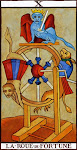
Tory cast a wry glance at Jack. "Let us mock the good housewife Fortune from her wheel," she murmured. "Again."

She saw Jack’s crooked grin in response. It would not be the first time they had tried to bamboozle Fortune.


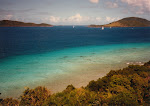
(Top image: Island of St. Kitts: View from above the town of Basseterre. Wood engraving drawn bt D. Lancelot, engraved by Maynard, 1878. © 2004-2009 www.antique-prints.de)