



Showing posts with label Spanish ring. Show all posts

Wednesday, April 14, 2010

Chapter 15: THE RIDDLE OF THE STARS


New Year’s was the last night of the holiday revels. At dawn, the slaves returned to their masters to receive their annual allotment of clothing and were dispersed back to their labors. But the island militia remained in possession of the town to discourage the last vestiges of rebelliousness, if not open rebellion. A sinister kind of quiet was restored to Charlestown. The hotel guests kept to their terraced gardens, their music room and their hot springs. Market trade fell off after the gluttonous feasting of the holidays, and the pantomime players were reduced to a week or two of idleness.

But Jack came to the tavern every day to fetch Marcus up the hill to work on new business for their stage productions. Jack and Alphonse worked him hard, but Marcus liked the work. He liked to hear their audience cheer, and he liked to get a share of the coins in the hat, after. His old obisha man worked him twice as hard and never paid him one black dog for his trouble.

Just now, he was scuffling through the sandy dirt at the edge of the clearing near the road, while Jack and Alphonse and Tory were fussing over the speeches. The road to and from the town had been full of revelers every night during the holidays, and there was always something to be turned up in the dirt wherever people had been. Especially people with too many coins to keep track of them all.

Nothing Marcus found went to waste. He kept all the coins for Cybele. Most of the rest of what he found were useless but pretty trinkets, good only for trading at the slave market for sweets. But anything finer—silken fans, stickpins, silver shoe buckles—he sold to that colored fellow at the tavern, that Mr. Tinker. Alphonse was always telling him there was no profit without enterprise and Marcus was proud of his arrangement with Mr. Tinker, who was known to give good value for merchandise received. All the folk of the town went to him with their gleanings.

Marcus wondered sometimes if he ought to share his bounty with Jack and the others, who shared everything with him. But then he reminded himself that he worked in the pantomime for his share of the profit and anything beyond that was the fruit of his own enterprise. Besides, how much fun it would be some day to surprise them all with a potful of money he had earned by himself. Jack would be so proud of him, and Cybele—

But what was that flash? Something glinted in a soft patch of hoof-trampled earth near the road. Probably only another shiny bead or bit of gilt; that was what he found most often after the revels. He stretched out his toe, scuffed up some dirt, saw it again, that vivid spark. It was a piece of jewelery, gold as a doubloon. Surely not paste. He stooped down and swept it up. It was a ring, and when he wiped off the dirt he saw a carved crest with a fancy design. There were so many loops and swirls in it, he had to study it for a long time before he recognized them as letters Tory had taught him. Two "Rs," all tangled together.

He rubbed the ring with the hem of his shirt, held it up to the sunlight, felt its weight in his palm. Here was a prize! Mr. Tinker would pay him well for this pretty thing. And he thrust the ring into the square of red bandanna he kept knotted inside his trousers.


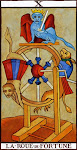
When the militia was dismissed, Cybele moved the children back to the camp; too many vagabonds frequented the tavern for her taste. Jack and Alphonse invested in a second horse for the wagon, Shadow, a powerful draft animal from a Nevis plantation, stronger and younger than True, and nearly as placid. He would be invaluable when it was time for the traveling players to move on in March, when the Bath Hotel shut down for the season. Secretly, Tory hoped that she and Jack would move on to the sea when they departed Nevis. Jack had promised her, and the others—well, Alphonse and Cybele and the Bruces were accustomed to making their own way. But for today Tory was content to idle in the shade of the wagon while Cybele spread out her cards: La Roue, the Wheel of Fortune; L'Amoureux, the Lovers. The quiet was broken now and then by the light tapping of Jack’s hammer as he inspected the wagon for wear.

"Men always tinkering," Cybele observed.

"Aye, you’d think a few whacks of a hammer would cause more damage than it fixed," Tory agreed.

"At least I’m not sitting idle," Jack responded, from the far end of the wagon. "The little green pixies of Devon would pinch you black and blue for your laziness."

"Green pixies," Cybele scoffed. "It sound like obeah. What do you know of such things?"

"We traveled all over Britain to the fairs when I was a lad, and I heard all the stories." Jack’s voice wafted to them from under the carriage. "Tom Thumb and Tom Tit Tot. My father was a Cornishman, so I heard a lot about the pixies and the knockers who mine the tin."

"Jack was a foundling," Tory explained to Cybele, hoping Jack was in a humor to tell them more. He so rarely spoke of his boyhood, and she hungered for any scrap to help complete the picture of his life. "He was raised by tumblers."

"You never know your blood family?" asked Cybele.

Jack came round the front of the wagon to join them, shook back his hair and offered up a shrug. "All I know is I was found in a box behind a row of tents on the second day of the May Fair in some West Midlands village. I might have been only hours old, or possibly a day or two, but no more. Starving, they told me, and squalling like all bloody hell, wrapped up in a cloth, and scarcely cleaned up. Someone must have been in an awful hurry to get rid of me." He smiled a little. After all, it was not as if he could remember being alone and starving and cold and afraid, it was just a story he’d been told.

"You born under the the bull star," Cybele observed. "Too stubborn to die. Fortune make some bigger plan for you."

"Not that I've ever noticed," Jack laughed.

"The pattern in the stars," Cybele murmured over her cards. "Every thing connected. Past and future. Man and boy. Male and female. Love and hate. Pixies and obeah," she winked at Jack. "All part of the pattern the Great Mother weave together from the day you born."

"And there’s nothing you can do about it?" Jack wondered. "Trapped in the spokes of Fortune’s wheel?"

"You can try to understand the pattern. Everything you do, every choice you make become a part of the weave. Only the Great Mother know the whole design. You can only listen to your heart and do what you must."

Jack moved off again to his work, but Tory could not resist when Cybele nodded for her to choose a card. It was L’Etoile, the Star, a woman pouring water into a river under a canopy of stars.

"This card speak of time, which flows like a river and feeds all of life. The stars be dreams waiting to be born, leading you forward. The river of time carry you always into the future. You cannot stop it. You cannot outrun it. You can only ride its currents."

"Or drown," Tory suggested.

"But we all drown in it, one day, every one of us. What matters is the journey."

When Jack came back to the wagon to clean himself up, Tory followed him in.

"Solved the riddle of the stars, have you?" he teased.

"You don’t believe in it?"

He cast her a wry half-smile as he crossed to the stool in the corner with a clean shirt. "Our remedies oft in ourselves do lie which we ascribe to heaven. All this talk of destiny and stars...it’s like blaming mala suerte. If things don’t go right in the event, you can always say, Ah! It’s not my fault. It was destiny, fortune, mala suerte. It was never meant to be."

"So you think there is no destiny," said Tory.

"Oh, aye. Destiny is what happens when you don’t lift a finger to help yourself. Life happens when you do." He turned again to the shirt in his lap, then paused. "Sometimes, onstage in the middle of a play, you might get lost in the text. It happens now and then, however well you think you know the piece. You know where you’ve got to go, but the pathway of words has entirely evaporated. The performance can’t wait, so you must make up the play as you go along, whatever it takes to propel you forward." He shook out his shirt. "There are no promptbooks to life to tell you what to expect, and when. You must make your own play. Invent your own destiny."

Tory was looking at Jack’s bare, scarred back. How often had he stubbornly refused to play the role Fortune had set him? From the very first hours of his existence, a newborn in a box at the May Fair, screaming for his life. She came up behind him and slid her arms around him.

"Si, hombre. The way I made my destiny when I bullied you into loving me."

Jack drew her arms more closely around himself. "Aye, and now you're stuck with me, and none but yourself to blame."


The private room at the back of the Medusa Tavern could be entered from the shadows after nightfall in Basseterre. On this night, at an hour past bell-ring, a broad, rustic table stood in a corner of the spartan room laden with all sorts of small goods. A man hovered in the shadows just beyond the circle of lamp light that bathed the merchandise before him. Even off-duty, without his cap of office to distinguish him, there was something charged and intimidating in the carriage of Chief Constable Stephen Raleigh.

Before him were spread the contents of one small chest and two hempen sacks delivered here tonight by an acquaintance of an associate. Raleigh knew many such gentlemen of venture. They brought him merchandise they had acquired off-island and were willing to pay handsomely for the privilege of selling it unaccosted in the Basseterre market. A fellow had a right to profit by his office, after all. Members of the island Council and Assembly sold their influence every day. Many of the first class of white gentlemen in Basseterre were professional attorneys who derived income from the several estates they managed on behalf of absentee planters, and sold credit to the planters most seriously in arrears. There were staggering financial rewards available to anyone fortunate enough to rise to a lucrative post like Casual Receiver or Collector of Impost on Liquor, if only one had the wit to pursue them. It was all business.

But there were small pickings tonight. Raleigh, sifted through the goods before him: handkerchiefs of lace or lawn, an enamel snuff box, two fancy carved pipes, a pair of pewter candlesticks, a damask tablecloth, a handsome silver bowl. Items a foolishly indulgent master might bestow upon his slaves as gifts, but more likely to be pilfered from him, in that quaint way the darkies had of rationalizing their thefts. How often had he heard some thieving slave claim that one possession could not steal another possession from his master, as if there were no moral issue involved. What a bestial race they were.

There was a larger pile before him of handsome silk gowns, a setting of fine china plate, combs and mirrors with pearl or ivory handles and several pieces of cheap jewelery, mostly gilt and glass but pretty enough in their way. The sort of things mulatta whores were often forced to sell when their white lovers turned them out. Normally, Raleigh would not bother with items of such dubious provenance; larger cargoes of liquor and tobacco brought the biggest payoffs. But he could no longer afford to turn down any possible profit, however small. He was still cash-poor, having paid far more than he could afford for that slave at auction last month. But he’d had no choice after that debacle in the Neck.

It rankled Raleigh even now to think of it, and his bruised back throbbed again with rage and humiliation. Himself, a chief constable of the law assaulted like a common beggar, and by a colored female, a damned harpy, no better than a slave. He had never even seen her coming, only looked up once over his shoulder before he got the crack on his head to see her wild eyes and her hideous, twisted face as she assaulted him with his own club; then the further shame of coming to himself again in the arms of Dr. Spence’s surly darky. It had taken all the cash Raleigh had to buy the fellow’s silence. Then a week on half-pay while he recuperated in private, claiming a spell of fever like a weakling child so he wouldn’t have to account for his wounds. Almost lost his promotion over it, but that he returned to his office with such renewed vigilance.

After that it was important to purchase his first slave property right away, whether or not he could afford it, to regain his standing in the community before any idle rumors of his declining powers or fortune could take root. Then he'd been unable to recoup his investment working the brute out because of the damned slave holidays. A miserable episode altogether that now left him in a position of having to treat with any common riff-raff with the means to purchase a favor. And in the meantime, those damned gipsy beggars had vanished into the air before they could be made to pay for their crime. But pay they would, one day, if he waited long enough. Stephen Raleigh never forgot an injury.

But what was this? Nestled into the folds of a silken veil with a necklace of fake pearls and a red glass hatpin, he noticed a spark of gold. It was a ring of remarkable quality and when he picked it up and held it under the light, he was dazzled by the workmanship. There was an elaborate family crest engraved into the top and when he turned the ring around and examined the inside of the band, he saw that it was inscribed with tiny, delicate words, a name or a motto, in some foreign tongue he could not read. More than a gentleman’s ring, then. A ring belonging to an aristocrat. Possibly even royalty.

Surely no planter nor any of his people would own a bauble like this. A wealthy merchant might acquire such a thing, or possibly a sea captain after an especially profitable venture, or a night of gaming in some foreign port. But how would this fellow come by it, this associate of Captain Trent’s who dealt in such small trade? Had the fellow been thieving above his station?

"Take a look at this, Captain," said Raleigh to the ruddy old seadog sitting in a chair on the other side of the table nursing a pint of porter.

Trent did not get up, but stretched his neck a little to gaze at the ring in the chief constable’s hand.

"Fine looking piece, that," he nodded, settling back again. "Ought to fetch a handsome profit in the market. You ought to increase your percentage, constable."

"It doesn’t belong to you, then?"

"Too fine for the likes o’ me," Captain Trent chuckled. "I prefer simple creature comforts to flash, I do. It’s the gaudy ship gets boarded, I always say."

"What do you know about the fellow who brought this lot in?"

"Good lad, works out of Nevis. We’ve done business before."

"Is he still about?"

"Aye, having a pint in the tap room. Shall I fetch him in?"

A moment later, Captain Trent ushered in a small, plainly dressed mulatto of middle years, the sort of fellow one would never even notice in the street. Raleigh kept to the shadows behind the table and held up the ring.

"This is a rather unusual piece. May I ask where you got it?"

"Oh, sir, me no can reveal the identity of me contacts. It be too bad for business."

"That may be, ah, Mr. Tinker, is it? But it is very bad for my business to traffic with thieves."

"Me no tief it, sir. Me pay a fair price to a little pickney boy in Charlestown, who be glad to get it. Him say him find it outside the Bath Hotel."

Raleigh paused to reconsider. Many rich, well-traveled people stopped at the Bath Hotel for the season, the ring might very well have come from there. How careless the wealthy must be with their possessions to allow some little darky to make off with something so valuable. But how fortunate for him. For an instant he had to repress a smile.

"Belongs to the hotel, does he?" Raleigh nodded. "What a fortunate arrangement for you, Mr. Tinker."

"No, sir, he be only a ragged boy who play antics for his living. Works the marketplace with a colored juggling wench and a black dwarf."

The lamplight seemed to intensify until all that Stephen Raleigh could see before him was white heat. A colored juggling wench and a black dwarf; there could not be another such pair in all the Indies. And as near as Nevis. No mention of that tall, patchwork clown, but that didn’t matter; he didn’t matter. The wench lived.


Alone in his lodgings less than an hour later, Stephen Raleigh had almost completed his plan. He sat in the silent dark so that nothing could distract him as he harried the situation from all angles in his mind. If that insolent Harlequin still lived, there was nothing at all to be done about him. It required far more interest than Raleigh could muster at the moment to get a white man hanged. But that damned colored whore he set such store by, Raleigh would be revenged upon her.

He could not prosecute her legally, of course, not without making himself the object of mockery and ridicule for the rest of his life. Besides, he could not defend himself in a court of law without sooner or later stumbling over the sticky issue of why she had assaulted him in the first place. Not that it mattered when a darky attacked a white person, but if that Harlequin was still about, he would be sure to press the issue. It was uncanny how these white fellows would stick up for their mongrel whores sometimes, even to the disgrace of their own race.

No, there were other, more sure and subtle ways to have his revenge. To break down her insolent pride. If she were alone in the world now, she would be all the more vulnerable to him; he would make her devastation complete. And if the mountebank lived, Raleigh knew that girl was his weakness. Destroy her and he would destroy them both.


(Top: L'Etoile (The Star), from the 18th Century Tarot of Marseilles, as seen on www.wischik.com/lu/tarot/index.html)

Wednesday, April 7, 2010

Chapter 14: FOOLS' REVELS


Jack had tried so hard not to think about the Spanish ring these past weeks, it was never very far out of his mind. He had no other evidence that Tory cared any less for him; indeed, the evidence of his heart and his own senses told him otherwise. But his heart had been wrong before, and the senses were so easily fooled. And just when he'd convinced himself he was behaving like a half-wit schoolboy, this happened. Had he become so burdensome to her she was scouting for her next opportunity to leave him? Perhaps he should have sampled Cora Harvey when he'd had the chance.


Purple evening shadows were lengthening across the clearing by the time Tory came trudging up the road from town. She'd been gone half the day; she hoped Jack hadn't worried. Her plans had come to naught, in any case. The Bruces’ caravan was shut up, they must have an engagement in town, and Alphonse must be off on one of his calls. She hopped up into the wagon to find Jack waiting for her, standing very still beside the bed.

"Where have you been, Rusty? It’s very late."

"I know, hombre, I’m sorry." She was still a little breathless from her walk. "I had...business."

"In the tavern?"

Tory darted a sharp glance at him as she unpinned her hat. "As a matter of fact, yes. I went back with Cybele after the market."

Jack frowned. Would she lie to him so boldly? "Did you not...meet a man?"

"Aye, there was a man there. Hellfire, there were dozens of men, it’s a market day. What’s the matter with you, Jack?"

"Nothing at all," he replied, with icy calm. "Only I’ve been sitting here for two hours thinking of nothing but that madman constable on the loose and hell-bent for revenge, wondering where in hell you were, and then Ada Bruce waltzes in to tell me she’s seen you in a tavern having a drink with a strange man."

"And you thought I was having an assignation?" Tory laughed, as she made a mental note to strangle Ada Bruce. "You know me better than that."

"I thought I did."

The chill in his voice sobered her. "He was a merchant captain, Jack. He had a ship..."

"Are you so anxious to leave?"

"Leave?" Tory cried, astonished. She felt like a rope-dancer; one misstep and she would plunge to her doom. "Hellfire, you’re the one who’s aways trying to run away from me, I’m always fighting to keep you! I was thinking of us!" But Jack was already folding into himself, fading away from her like a dream; another moment and he would be out of her reach. "Why else would I need a ship?" she reasoned.

"To find Matty?" Jack suggested coldly.

"What?"

"I found his ring."

"His ring?" It was as if Jack were suddenly speaking Chinese.

"The one he had off that Creole boy," Jack went on, with elaborate patience. "I found it in your things. He murdered for that ring. It must have meant a great deal to him to give it to you."

Tory stared at him for a full minute, shocked beyond speech. Then she spun around to the shelves, shoving aside gourds and odd scraps of clothing and an old newspaper as she dug out her basket. She fished the pouch out and broke the knotted cord with one angry tug; yanking out the gold ring, she advanced on Jack, waving it in his face.

"Oh aye, it’s a fine, sentimental token of Matty’s great affection for me, this ring! He threw it at my feet and called me a whore for daring to suggest there might have been something unmanly in the way he obtained it. I’ll certainly cherish that moment forever!"

She lunged across the bed to the window and threw open the shutter.

"I’ll show you how much this ring means to me. And Matty fucking Forrester, as well!"

And she hurled the ring as far into the shadowy night, she couldn't even hear a plop in the dirt. Slamming the shutter closed, she came about to face him.

"But...you never told me," Jack faltered.

"I had forgotten all about it!" Tory exclaimed. "It wasn’t worth remembering."

Jack was backing away, shaking his head. "But what was I to think when I found it hidden away like some treasure?"

"Did you not think to ask me about it?"

"I thought about it," he muttered, looking anywhere but into her eyes. "But I was afraid to hear what you'd tell me."

"I would have told you the truth," Tory declared. "That Matty isn’t even the ghost of a memory to me. Why can't you believe me?"

"Because I'm a fool." Jack glanced up, his dark eyes too full of shame to even register relief. "You’ve every right to pitch me out, Rusty, I wouldn’t blame you if..."

"Oh, stop it!" Tory lurched away from the bed and threw her arms around him. "Idiot," she murmured. His arms came around her in a grip of iron and she held him as tight as she could, sore ribs be damned.

"Oh, mi vida, I am so sorry," he whispered. "I’m such an ass."

"Aye, you’ll get no argument from me. When did you stumble across that damned ring?"

"The day of our first Macbeth," he confessed.

"But that was weeks ago!" Tory cried. "And you’ve been torturing yourself with this fantasy ever since?"

"It was the only way it seemed to make sense."

Tory lifted her head to look into his face. "I love you, Jack. Don’t you know that by now? Sense hasn’t anything to do with it."

"Evidently not." And he drew her close enough to crack her own ribs. "I was just…so afraid I was finally going to lose you."

She shook her head in exasperation. "Hellfire, I didn’t even know what we were fighting about."

"Civilization," Jack muttered. "It’s coming too damned close."

"Then let’s leave this place!" Tory urged him. "Let’s return to the sea, where we belong! Two less buskers in these islands will never be missed."

"But...I...Rusty, you know why we can’t," Jack faltered. "Merchantmen are miserable berths, smugglers are worse, and besides, you’re a woman..."

"There are all sorts of ships, Jack, with all sorts of crews. This fellow today is heading straight back to the States, but there must be others! Can we not try? There’s nothing but strife and trouble and danger for us ashore. What would we be leaving behind?"

Jack did not answer. Until this moment, he’d had no idea how much she still yearned for the sea, when all this time he'd been foolishly trying to build them a life ashore. But Tory would always be half-wild; it was what he loved most about her. He might as well try to domesticate a mermaid. How could he tell her how much their playing meant to him? Harlequin, Macbeth, even Aguecheek, as fragmented as they were, gave him more joy than he could ever have imagined. But it seemed like such a selfish, frivolous pleasure, now, weighed against Tory’s freedom.

"We’ll find a way, companera." He drew her closer so he couldn’t see the eager light in her eyes. "If that’s what you want."


Christmas at the Bath Hotel was a series of lavish affairs. In December, the wealthiest planter families of Nevis hosted splendid dinners and dancing parties for members of the Bath Hotel elite. On Christmas Eve, the military band from St. Kitts was engaged to play English carols for the hotel guests. And on Christmas Day, after morning services at the parish church of St. Paul’s in Charlestown, a fancy-dress ball was held at the hotel, where guests could mingle with all the fashion of the island.

Jack and Tory’s little company of players were engaged to perform the pantomime at the Bath Hotel on Christmas evening, before the dancing. Jack said every English Christmas celebration had a pantomime and Alphonse added there were not likely to be many mercenaries abroad during the Christmas revels; they were all needed in the island militias to keep watch over the slaves. Calypso sewed new patches over the rips in Harlequin’s shirt and they devised some new comic business with less ribaldry to offend the ladies and no hired drum to beat them in. Alphonse said all the drummers on the island were engaged tonight in their own revels.

The courtyard behind the Bath Hotel had been magically transformed. Glass-globed lanterns lined up along benches and hung in the trees defined and illuminated a performing space in the center of the yard. Chairs that had been set up along the back veranda and in the balconies above were filling up with spectators. Jack said it looked like the gallery and boxes of a proper theatre, to which Ada Bruce was heard to add a nostalgic sigh.

The crowd was in a holiday mood boosted by plenty of rum punch and sangaree; even the most decorous matron was not likely to confine herself entirely to sugared lime juice on such a festive day. They applauded Marcus’ brash tricks and Punch’s flaming torches. A fiddler from the military band accompanied Captain Billy’s ballads and Mrs. Bruce’s Highland fling and tarantella. Then the pantomime began. Harlequin engaged in less knockabout tumbling and more nimble dancing than before, but the others played all the more brightly, and they were received with vigorous approval. For an encore, Jack took off his mask and threw a cloak over his motley to give two famous speeches from Hamlet. The performance concluded with the players standing in a line singing the stirring patriotic song Captain Billy had told them was all the rage in London the previous spring, drawing most of the audience to its feet.

The spectators drifted indoors as lights blazed on inside the hotel, gilding all the doors and windows in red and gold until the building resembled a huge, glowing ember in the night. A youthful English factotum from the hotel came out to invite the players to stay for the dancing, and Captain and Mrs. Bruce were delighted to accept. But the others were eager to make their way back down the road again, where the pounding of a hundred Christmas drums rose up to embrace them from the town. Let Ada Bruce execute the fussy figures of the cotillion with the English, Tory thought; this was more to her own taste. It was the music of abandon.

Their riotous patches and ruffles were perfectly suited to this topsy-turvy night. They passed a troupe of mummers crying, "Make way fo’ Ole Mas, King of all the buckras!" and Tory saw a Jonkanoo figure in a whiteface mask and a long, curled wig with a Napoleonic hat full of feathers. Another small party Tory took to be girls, at first, in rather slipshod finery. But as they drew nearer, she saw they were young males dressed in ruffled petticoats and ladies’ jackets festooned with all manner of ribbons and bows. Whenever they passed any prosperous-looking person, one masked boy fell to his knee, clasping his hands and pointing to his stomach while his attendants circled round him, crying "Koo-koo! Koo-koo!"

"Him be Actor-Boy," Marcus told her. "Him beg fo’ food. ‘Koo-koo’ the noise him ‘tomach make when him be hungry."

A party of white spectators was passing by and the Actor-Boy and his entourage raced over to them, crying,

"We play fo’ you, massa. We make very fine play fo’ you!"

The boys withdrew long wooden sticks from within their skirts and brandished them, menacing each other in quick little jig steps as an older boy pounded on a long drum held between his knees. The boys shrieked and flailed away at each other until only the chief boy was left, dragging his wooden sword along the ground, past the inert bodies of his fallen comrades, crying for a horse.

"B’God, it’s Richard The Third, or I’m damned," Jack exclaimed. "A bloody deed, and desperately dispatch’d," he noted, as the Actor-Boy keeled over into his flounces.

"We ought to have brought out our Macbeth," Tory laughed. "How did we overlook this venue, Alphonse?"

"The people do their own playing, tonight," said Alphonse.

"That drummer ought to keep still during the performance," Jack observed, as the Actor Boy’s little troupe scampered off. "I recall very few opportunities for dancing in Richard The Third."

"Not every drum good fo’ dancing," said Cully, standing nearby. "Some only good fo’ talk."

"Talk?" echoed Jack, glancing at the lad. "What do they say?"

"Me only know drum talky, sometimes," Cully shrugged. "The Africans say so."

Jack turned to Alphonse, but he was already hurrying off to greet Cybele and Calypso, who was holding the squirming Edward by both hands to prevent him roaring off and getting lost. But once Marcus and Cully took charge of the boy, Alphonse gallantly offered Calypso his arm. And off they all strolled under the mocking moon on this night of fools' revels, when the slaves played at being masters of their own fate.


It was not difficult for Alphonse to disengage from the party. The difficulty was in making himself stay as long as he did, for the sake of civility, parading around like any other fatuous black fool with Calypso on his arm. As if it could ever be anything more than a crude burlesque, one night’s foolish fancy.

He made his way up the Main Road out of town, nodding to the strays and drunkards who reeled past, wishing him the compliments of the season. In fact, the season had always depressed him, with its false merriment and false freedom, while militias all over the Indies went on alert against the slightest infraction. The planters only played at indulgence; it was all part of the greater farce.

He found their wagon secure in the clearing, True undisturbed under the trees. The caravan had not yet returned, the Bruces must still be making merry at the Bath Hotel. It was his turn to sleep in the wagon, but inside, pulling off his Punch costume, he realized he was too agitated to sleep—even if the drums would permit it. Victoria and Jack might have use for the bed if they came back late, flushed with rum punch and revelry and each other. He would leave it for them, then. It would be his Christmas gift.

Outside, he took his bedroll into the treeline behind the wagon, hidden from the road but near enough to hear any disturbance. True was idling nearby and Alphonse went over to identify himself; they would be on watch together tonight. He held up one hand and the old horse lifted his head. Then the huge head veered sideways at him, the grey, steaming muzzle plunged down into Alphonse’s palm, nearly devouring it, and Alphonse took a hasty step backward.

"Compliments of the season to you, too, old fellow," he muttered, wiping his wet hand on his shirt. What a perfect beast of burden the old horse was, no voice to protest, no dreams of a better life, and wholly unaware of his dormant power.

Alphonse sat down on his pallet and closed his eyes against the melancholy that separated him from the revelers below.


The murmur of voices is urgent, defiant, as the swarm of men and women and some children moves down the road, away from the slave quarters toward the mill. Blacks and mulattos together in plantation linens, three or four dozen of them, shouting and chanting and beating together their sticks like mummers in a Christmas parade.

Some carry torches of bundled kindling to light their way, scorching the black night. But the crackle of the flames and the rumble of voices give way to the drumbeat of hooves pounding along the hard-packed dirt road ahead, the hoofbeats of devils thundering toward them out of the dark. The slaves stop, confused. The militia riders, drunk on righteous outrage, rein up their jittery mounts a few yards away, under the direction of the Army colonel in command; some pace their huffing horses back and forth across the road in a menacing manner. Behind the riders, the first ranks of a regiment of foot are maneuvering into position, muskets and rifles at the ready.

A few slaves brandish their sticks and pikes. One or two have cutlasses for cutting the cane. A leader steps forward, a mulatto houseman in elegant livery, despite his lack of stockings or shoes. An emblem is sewn onto his jacket, a maroon W on a gold chevron. W for Whitehall. He steps into the road, unarmed, to speak to the colonel on horseback. The militia riders edge forward, taunting. The slaves stand their ground. The foot soldiers nervously cradle their guns.

At a sudden, sharp squeal from a frightened hog penned up nearby, a tiny figure is startled out of the shadows of a hay wain at the side of the road. Disoriented, the child bolts into the road, past the little crowd of slaves toward the horsemen. The slight figure of a young black woman breaks ranks and runs into the road after him. The colonel’s horse shies backwards. Another horse behind him rears up, the child stops, terrified, and the woman snatches him out of the way of the flailing hooves. As other slaves rush forward to help her, an explosive pop of flame from one of the torches prompts an answering shot from the soldiers. The spooked horse dances crazily, another shot is fired, and another, and the young woman jerks in place and sinks to the dirt as the shrieking child wriggles out of her arms. The horsemen charge into the crowd of panicked slaves, swinging swords and cartwhips, followed by the soldiers still firing their guns. The hay wain bursts into flames from a fallen torch and the figures are frozen in a hellish tableau of roaring fire and human screaming and shots and more shots...


Alphonse lunged up with a stark cry. He could still hear the shrieks and the horses’ pounding hooves, smell the smoke. Then there was another sportive shot, some young blood saluting the midnight hour on this festive night. More chanting drifted up from the town, more powerful drumming, more shouting and harsh laughter. It was Christmas night. The slaves were having their holiday. He had only dreamed the rest.

Alphonse sat back upon his pallet as True whickered curiously in the dark nearby. Shaking, Alphonse lowered his face into his hands. Allmighty God, it had seemed so real. He thought it was all happening again.


(Top: Koo-Koo, or Actor Boy, Jonkanoo Costume, Jamaica, 1838 Image Reference: Belisario03 as shown on www.slaveryimages.org, sponsored by the Virginia Foundation for the Humanities and the University of Virginia Library)

Wednesday, January 27, 2010

Chapter 4: CONFESSIONS


They made an unlikely trio, a tall white man, a bold woman of color, and a small Negro with the manner of a lord. But their novelty turned a profit at the busy weekday markets during crop-over. Jack and Tory slept in lodgings every night, however spartan. Alphonse was frequently off about his mysterious calls, but he met them every morning at Pugh’s, fit and ready for the day’s work.

When there was no public market, Alphonse knew which tavern-keepers would trade them a meal to attract custom to their door and which preferred to keep their roadways clear. He had an unerring instinct for which areas of the town would be least frequented by constables at any given hour of the day. He also had them painting their props and keeping their clothing in better repair, despite Tory’s woeful deficiencies as a seamstress.

But it was at the Sunday market where they played their most audacious tricks. Alphonse was particularly watched and admired by the slaves, who sometimes crept up to speak to him when Jack and Tory performed their duets. Swept up in their new enterprise, Tory was enjoying her life ashore—for now. She had not abandoned her dream of the sea, only deferred it. The sea would always be there, waiting, like a forgiving lover. When the time was ripe, she knew she and Jack would return to it.

But the frenzy of crop-over was winding down. The few ships still in the bay were anxious to be gone by the first of August, when double insurance had to be paid on their cargoes against hurricanes. The planters were returning to the safety of their hillside estates. All of Basseterre would soon be shuttered up for the hurricane season, leaving the streets to a few hardy tavern-keepers and occasional British soldiers from the nearby fortress of Brimstone Hill. Alphonse suggested they remove to higher ground and try their luck up the coast in Old Road Town, where he had business to see to.


Tory had lived eleven years on her papa’s farm, five more that felt like fifty at the Worthen Female Academy in Boston, after her mama died and her father lost his wits, and two more sailing the Indies for profit aboard the Blessed Providence. Eighteen years, plus these months with Jack in the islands, she thought, as she packed up her basket, and still so little to show for it.

She picked up her most cherished possession, the leather-bound logbook she had once claimed for her own off a prize ship while Jack was raiding the captain's library. That was Jack's idea of plunder: books. He never shared their shipmates' fantasy of someday growing rich in the trade. She had spent many sultry nights ashore filling her logbook with the history of her life, while the men diced or drank away their boredom. Stuck into its pages to mark her place was a worn Spanish playing card, the sota de oros, Jack of Diamonds. Tory had been told it was her fortune, hard work rewarded. Indeed, Captain Hart soon set her the task of keeping a proper ship’s log—despite the opposition of Nada, the big, glowering Cuban, Hart's trusted mate in every respect. Jack told her the Scots privateer and the dispossessed cubano peasant had been through every kind of hell together. "What else," he'd asked, "do you suppose love is?"

Tory half-smiled at the memory. What had become of them all? She folded the white cotton shirt and moss-green canvas trousers she'd worn in the trade into her basket. Her shipmates had been an unlikely family, but the best she could find after losing her blood family so long ago. Patting her clothes into place, she felt something hard under her fingertips. Drawing out a small fabric pouch tied inside her trousers, she caught her breath.

She'd forgotten about this. Gingerly pulling open the knotted drawstring, she peeped inside at the gold Spanish ring. A tiny inscription ran around the inside of the band, Uno Dio Sobre Todos, One God Above All. Two elaborate "Rs" were entwined on the crest of the ring, two fine old Spanish families whose hopes for the future were dashed when that proud Creole youth died for his imprudence by Matty’s sword on the rail of the Blessed Providence.

Matty Forrester. How long had it been since she'd spared a thought for him? Not long enough, the memory still rankled. He was the most skilled swordsman aboard the Providence, who cared for nothing but the glory of battle, but to whose handsome, youthful face and form Tory had attached all her half-wit girlish yearnings. Matty, whose thoughtless bravado got their prize hostage killed and caused them to be hounded out of the Indies by the warships of three nations. All for this trifling folly, this ring. Then he'd pressed it on her in a rage, eager to be rid of the blood guilt it bore. And Tory had not had the wit to refuse, smothering it among her things to prevent the ill fortune from spreading.

She shivered and knotted up the pouch again, to keep the mala suerte from getting loose. She ought not to keep the wretched thing, but after only an instant of indecision, she thrust the pouch deep into her trousers again. Blighted as it was, this ring was one of the few relics she had left of the Providence and her crew.

At the last, she picked up another small packet, a brittle banana leaf folded into a square and tied with straw. Inside was nothing. The herbs she had gotten from an old African woman on Tortola Island were gone, and Tory did not know how or where to purchase more. Well, she consoled herself, she and Jack were traveling with Alphonse now, who would doubtless keep them far too busy for anything but sleep at night.


"I shall miss this place," Tory announced over her strong, spicy coffee on their last morning at Pugh’s. "We won’t have such nice meals on the road."

"Does not this gallant Englishman feed you when you travel?" Alphonse never lost an opportunity to needle "the English."

"Well, we eat..." Tory began.

"In the odd moment when I’m not forcing her to bathe my feet in spring water or fan me with palm fronds," Jack added, peeling an orange.

"...but our provisions often run out before we can afford fresh," Tory finished, laughing.

"Then you let the vendors overcharge you," said Alphonse.

"We pay them next to nothing," Jack protested.

"Which is what you receive in return," Alphonse replied. "You must manage what you earn, if you would show a profit." He hopped off his chair. "Today, I shall bargain for our bread, and I promise you we shall not spend another dog from here to Old Road Town. Watch me and see how it is done."

Jack stood up, too. It was his turn to pay for the meal.

"You go ahead, Rusty," he grinned. "See what trade secrets you can pry out of Monsieur Rothschild here. I’ll meet you outside."

He strolled off to settle the bill while Tory and Alphonse went out into the street.

"Why does he call you that disrespectful name?" asked Alphonse.

"What? 'Rusty?'" Tory was surprised by the question. She could not remember a time when Jack had called her anything else, and she was rather fond of it. "I think it had something to do with my hair, once."

"But you have a perfectly beautiful name, Victoria. You should make him use it."

"I’m afraid you’ll find us far less elegant in our speech than you," she smiled.

"I make no pretense to elegance," said Alphonse.

"I’ve heard your French," she reminded him.

"But my mother spoke French, she was born on a Frenchman’s estate. When he died, we were sold to an English estate, where I learned the English of the overseer."

"You speak it far better than any overseer I’ve ever heard."

Alphonse made a little bow. "I have learned that if one would be treated like a gentleman, he must not speak like a slave."

"But you never learned such fine speech on a plantation," Tory prompted.

"No. I was once employed at a very grand estate...oh, very far from here. The proprietor was an Englishman who lived like a prince in the ancient style. Armies of servants, lavish entertainments. He even named the place for what I believe was an English palace. Whitehall."

Tory shook her head; she knew little of English palaces.

"An ironic name in any case for a place built upon the labor of Africans," Alphonse shrugged. "It suited him to employ a black dwarf who could juggle and speak French to his guests. It also amused him to instruct his pet monkey in the proper King’s English."

There was no particular rancor in Alphonse’s voice, but Tory’s experience with Jack had taught her to tread with care in the mire of another person’s past.

"Could you not leave, if you were a free man?"

"Leave?" echoed Alphonse. "Turn down such a useful gift while the English paid me a wage to receive it? Never turn down an opportunity, Victoria. Especially at another man’s expense."

No pirate could have said it better, Tory thought. Aloud, she said, "And that’s where you got your elegant name, Monsieur Belair?"

"I was called 'Alphonse' after my father. But I never knew him. He was sold off before I was born. I took my second name to honor my mother. She had few enough joys in this life, poor woman, but she loved to sing at Christmas time. It is called the belair style, the comic songs sung in the female processions. It is quite a spectacle."

"Ive seen them," Tory smiled again.

"She had a sweet voice," Alphonse recalled. "It was the only time she was ever truly happy and that is how I remember her. After she died and I bought myself free, I had myself baptized 'Alphonse Belair' in her honor." His gaze flicked up beyond Tory for an instant and he raised his voice a notch. "For another thing I have learned is that every respectable gentleman has a surname."

"Which excludes me, thank God," Jack grinned as he came strolling up behind Tory to join them.


Soon, very well provisioned, they had left Basseterre behind, traveling up the leeward coastline overlooking the sea. Steep green inland hills swept up toward the high ridge of cloud-capped mountains that dominated the interior of the island. The sugar estates were planted in strips from the middle of the central mountain range down to the coast. At this time of year the fertile hillsides were checkered in squares of new green cane—Alphonse called them cane-pieces—alternating with golden squares where ripe cane had been cut and harvested. The road was damp from the recent rains, but today there was blue sky between high, rolling white clouds and a fresh breeze. It was a day made for running and whooping, as every step took them farther away from the civilizing influence of the town. But Alphonse’s short legs rendered his progress steady, not swift, and Tory and Jack had to shorten their stride to stay apace with him.

"What sort of business have you in Old Road Town?" Jack asked Alphonse as they ambled along.

"Sedition."

Jack grinned. "Revolutionary, eh?"

"I am a free black man, that most fearsome of God’s creatures. Do you not tremble at the mere sight of me?" Alphonse squinted up, far up, at Jack. "So I must be a criminal into the bargain. Ask any constable."

"It’s true, then?"

"It is true that I traffic in that most dangerous merchandise, information. The ministers in London are talking of abolishing slavery. I make it my business to know what they are saying."

"Aye, they’ve been talking about it since I was a boy," Jack put in. "Wilberforce and The Saints and all the rest. For all the good they’ve ever done."

"They did end the slave trade at sea," Alphonse pointed out.

"Only legally," countered Jack.

"It would be a useful law if not for the smugglers and pirates."

Tory’s head jerked up to protest, but she remembered herself.

"It would be useful if slavery were illegal on the plantations," Jack argued. "Then there’d be no profit in smuggling 'em in."

"Yes. Leave it to the English to write two opposing laws when they cannot make up their minds about a thing," Alphonse agreed.

"What part do you play in the business?" Jack asked.

"A small one, only. I am an observer and a messenger. There are many associations of freemen of color who write to their agents in London on behalf of their own civil rights. As my trade takes me through many islands, I am useful to them, carrying news and messages from one organization to the next."

"And these fellows are abolitionists?" Jack frowned.

"Very few of them, I find, are much interested in ending slavery," Alphonse admitted. "It would be foolish to elevate the only class lower than themselves. But in return for the messages I carry, they inform me of the anti-slavery movement from the letters they receive from their allies across the sea."

"It seems to me your method of gathering information is awfully hard on the feet," Jack observed.

"At least I am not soft and gouty like the English."

"Have you never heard of a newspaper?"

"I was born a slave," Alphonse replied crisply. "It is illegal for slaves to read."


That evening they pitched their camp on a small plateau sheltered by scrub woodland and palms in the low foothills above the road. They were still some distance out of Old Road Town, so Jack and Tory were surprised when Alphonse announced that he had calls to make in the neighborhood. Left on their own, they split open a papaya and watched the evening fade into night.

"Do you think Alphonse really is some kind of revolutionary?" Tory wondered. "What can he be up to out here in the middle of nowhere?"

"Revolutions get people killed, slaves especially. Alphonse is too sensible for that." Jack sliced out another chunk of vivid orange fruit and handed it to her on the blade of his knife.

"When are you going to teach me to juggle those?" Tory asked, nodding to the blade as she plucked off the papaya.

"Certainly not tonight," he laughed.

"Why not?"

"It’s too close to Lammas, Rusty. The first of August, the beginning of the harvest season in the old calendar. Faeries and witches and all sorts of spirits are said to run amok in the woods at Lammas, wreaking all sorts of havoc. Very powerful, these spirits. Not a good time to be flinging cutlery about."

"And these faeries would bewitch our knives?"

"Oh, aye. And show your future, if you’re fool enough to ask."

"But I know the future," she smiled. "The immediate future, anyway." She crept closer to kiss him, letting her hand drift slowly down his shirtfront, across his lap and down along the inside of his thigh. His mouth opened slowly under hers and his arm curled around her back. But then he peeled his mouth away.

"I thought your herbs were gone," he reminded her.

"They are, but I don’t always need them," she said, still gently rubbing his thigh. "Perhaps we’ll be lucky."

"At Lammas?" Jack laughed, plucking her roving hand away. "It’ll have two heads and cloven hooves into the bargain." He lifted her hand and pressed her palm to his mouth in regretful farewell. "I hope you’ll put it on my account for later."

"I will, but I intend to charge you a great deal of interest," Tory grumbled back. "Ruinous, in fact."

A silver scrap of new moon was creeping into the shelter of the western hills, leaving the night to the Lammas faeries. The rainclouds had blown away and a thousand stars were winking open in the black sky. Perhaps talk of English faeries had put Jack in a wistful mood, or perhaps he meant to distract Tory from her purpose. But when he spoke again, his voice was very soft.

"Do you remember much of your mother?" he asked her.

"She was beautiful," Tory murmured, "small and lively, with dark eyes always full of laughter. I remember her long black hair that she wore in two plaits, and the sound of her voice when she told me the old stories."

"It's just…I never seem to think of you as Indian," Jack confessed.

"I didn't know it, myself," Tory shrugged. "I grew up on a little farm like other country children. Papa was a Scotsman, and his sons, my half-brothers, were both fair; I don’t suppose it ever occurred to me that I was any different. It wasn't until I got to Boston that I realized what a savage I was."

"Aye, that’s what civilization is for, making sure we all know our place," Jack observed. "I suppose they locked you up in the scullery?"

"Worse," she laughed. "They gave me a proper Christian education."

"I’m pleased to see so little of it rubbed off."

"Aye, I’m afraid I was a great disappointment to the Worthen Female Academy," Tory agreed. "They could never make me ashamed of my mother."

Jack drew her closer. "The world is full of righteous fools," he murmured, his lips brushing her hair. "The vicar at my parish school used to scold me for loving Shakespeare better than the Bible."

"Of course," Tory laughed again. "All that sin and wickedness! The Worthen sisters were too pious to have Shakespeare in the house."

"But Shakespeare is so much better than the Bible!" Jack exclaimed. "There’s no censure in Shakespeare, and every facet of life is represented, bawds and kings and villains and fools. Everything you could ever think or feel or want, Shakespeare has already written about it. And everything that happens in your own life affects how you to read him, so his words always seem new and fresh, however often you play them."

Tory glanced covertly up at the most ardent expression she had ever seen on Jack’s face, outside of lovemaking.

"I suppose you miss being a player," she observed.

"Desperately," Jack laughed. "I'd forgotten how much."


Jack was dreaming of Indians in war paint spouting iambic verse. There was a soft snap and rustle as they passed and his eyes opened to a black, starry sky.

"Alphonse...?" he whispered.

Then the stars disappeared and there was only the black.


Tory was waking to the sound of Jack’s voice when a weight fell on her, knocking the breath out of her and pinning her to the hard ground. It was like being trapped under a landslide; she could not move her hand to grope for the dagger strapped to her thigh under her skirt, but she felt a sharp blade against her throat and stopped squirming.

It was too dark to see the face above hers, but hot, sticky breath, labored and bitter, washed over her face. The arm of the hand clasping the knife pinned down her shoulder, and she felt a hand dragging up her skirt and a heavy knee between her legs. No words were spoken between wet bubbles of panting breath as the crushing weight pressed her down and the blade creased her throat. She knew that blade would spill her blood when he was finished, and she was powerless to fight back.

Then a sudden, sickening wheeze burst out of her attacker. The head above hers jerked upwards, not panting but gagging. The weight rose slightly off of her chest and the rigid arm across her shoulder flexed, then slackened. When Tory felt the flat of the blade slide against her neck, she lunged sideways out from under the struggling body, rolled over the fallen knife, and grabbed it as she came to her feet, poised to spring. Before her in the dark, she could just make out a small figure with one powerful arm wrapped entirely around the intruder's neck, choking him. Alphonse. A hand touched her back and she jumped.

"Rusty?"

"I’m all right, hombre..."

Jack lurched past her on his knees. "Let go," he hissed. "Alphonse!"

Alphonse relaxed his grip, and there was a wet, desperate gurgle for air. Jack’s two hands fisted together crashed down and the intruder lay still on the ground between them. The momentum almost sent Jack face-down on top of him, but Tory caught him by the shoulders and he swayed back up on his knees.

"Almighty God, Victoria, forgive me..." Alphonse began.

"For saving my life?" she panted.

"Wait!" Jack cautioned, head up, listening.

"There's no one, I came through the wood," said Alphonse.

"Who is it?" Tory’s voice was low and strained; she was shaking with rage, not fear. She crawled over to the remains of the fire, thrust a stick of dry timber into the glowing embers until they blazed, and came back on her knees, holding the light aloft. Alphonse grabbed the intruder’s shoulder to turn him on his back. Jack frowned down at the white face, and looked up at Alphonse.

"I...do not know him." Alphonse sounded surprised. "There are often ...thieves and brigands on the road."

"Thieves prey on people with money," Jack pointed out. He patted down the intruder's ragged coat with practiced fingers and fished out a small purse of delicate blue satin. "Looks like he's done his thieving somewhere else," Jack added, although there were scarcely coins enough left inside to rattle together when he shook it.

"But…I know this fellow,” Tory whispered, creeping closer with the light. Both men turned to look at her. "In Basseterre. He tried to run off with our profit, that day we met Mr. Greaves, remember? I... prevented him."

"Oh, Christ," Jack groaned, sitting back on his heels. "You see how men hate to be humiliated by a woman. Especially in public." He shook his head. "How long has he been watching us, nursing his grudge, waiting for his chance—?"

"You are not suggesting this is Victoria’s fault!" Alphonse cried. "A great deal of the blame lies with you. Look how you dress her, like a...a washerwoman, a slave. It is no wonder white men think they have the right to abuse her."

"But...we thought she would be safer..." Jack began.

"Safe? No one is safe in the Indies! The slaves are subjected to every kind of punishment and abuse, the free people of color are terrified of being made slaves again and the whites are in a panic that the slaves and freemen will rise up and murder them in their beds. There are men without scruple for hire under every rock, and a hundred port towns crawling with the lowest vermin who ever sailed the seas. Safe!" Alphonse spat out the word again.

Tory frowned at Alphonse. It was only on dry land that she had ever been assaulted by vermin calling themselves men.

"There is no safety," Alphonse concluded. "There is only vigilance. If you believed you might be pursued..."

"It was you who spoke of forgiveness," Jack fenced. "As if you believed yourself to be the target."

"There are, of course...opportunities to make...enemies...in my business," Alphonse admitted.

"But it’s not a crime to carry messages between lawfully assembled organizations," said Tory.

"It is not a crime to be a black man who is not a slave, not exactly, but there are many who do not care to see the practice encouraged." Alphonse rubbed his arm as his gaze flicked from Tory to Jack. "I see you are also accustomed to fighting for your lives."

The crumpled form of the intruder lay silent between them, the assailant Tory had brought down upon them all. She knew the very least they owed Alphonse was the truth. Jack knew it too.

"Those lowlife vermin of the seas you’re aways railing about," he said to Alphonse. "I was one of 'em."

Alphonse’s expression remained composed. "A smuggler?" he suggested, quietly. "A...slaver?"

"Both," Jack nodded. "I was also a pirate."

"And so was I," Tory injected, relieved to have it out at last. She saw Jack shut his eyes and mouth a silent oath. Alphonse gazed back at her.

"But...it happens sometimes," he offered. "A young woman taken by pirates. Held hostage..."

"I was not a hostage!" Tory exclaimed, insulted. "I chose that life and I’m not sorry about it."

"She was never in the slave trade, Alphonse," Jack put in.

"But you were?" Alphonse's black eyes shifted again to him.

"Not by choice," Tory tried to explain. "He has nightmares about it, still. But he was starving and desperate for a berth..."

"Rusty, it doesn’t mat—"

"Yes it does," she insisted. "Jack fled to the pirates to escape the slaver. I was a runaway, too. The pirates saved our lives, both of us. In all the time we sailed with them, Alphonse, we never once traded in slaves. Our captain would not hear of it. He had runaways in his crew."

Alphonse continued to look back and forth between them both. "It is never wise to probe too deeply into what others must do to survive in the Indies," he said, at last. "I hope that this will not interfere with our partnership."

"It’s your choice," said Jack. "There is no guarantee we'll not be recognized and pursued. There are handsome rewards posted in every town for the capture of pirates. It might go hard with you to be found in our company."

"I am no stranger to hardship," Alphonse murmured. "Besides, it is apparent that you are helpless without me," he added, glancing down at the prone intruder.

"Is he alive?" Tory asked warily. She had seen the face of death at times, but had never fought to the death herself.

"He breathes," said Alphonse. "After a fashion. There is a watchman’s hut some little way up the hill where we might shut him up for a time, until he is discovered or crawls away."

"Or we could tumble him down the hill and get the hell away from here," suggested Jack. Alphonse nodded and reached for the purse, shaking a gold Spanish dollar into his palm. "But do you not think Victoria ought to have some compensation for what she has suffered?"

"It was Jack who got hit over the head," Tory pointed out. The dying flame licked at her fingers and she shook it out and thrust the charred stick into the muddy ground.

"Alphonse is right, Rusty. You keep it."

Tory took the gold piece from Alphonse and stuck it through the split seam of her skirt, working it into the leather sheath that held her own knife against her thigh. The weapon she had been unable to use because she let this sweating pig take her by surprise. The coin seemed to burn through the sheath against her skin, a warning against complacency.

"We are in the borderlands, so we ought to find another watchman’s hut before too long where we can rest," Alphonse added.
"There are no watchmen?"

"Border watches are very indifferently kept, Victoria, in this season especially. It is a position for the old or lame, slaves with too little value to be sold, who might otherwise be idling. I spent much of my youth watching the borders, practicing my craft. But had I not been available, the post might just as well have gone unfilled."

Jack and Alphonse rolled the inert body into a shallow gully, then came back to collect their things.

"If anyone pursues us, for any reason, it is best that we enter Old Road Town with a bold face tomorrow," Alphonse declared. "We must be on our guard, but we must behave as if there has been no trouble and we expect no trouble. We must proceed as if we are in league with Fortune."

Tory cast a wry glance at Jack. "Let us mock the good housewife Fortune from her wheel," she murmured. "Again."

She saw Jack’s crooked grin in response. It would not be the first time they had tried to bamboozle Fortune.


(Top image: Island of St. Kitts: View from above the town of Basseterre. Wood engraving drawn bt D. Lancelot, engraved by Maynard, 1878. © 2004-2009 www.antique-prints.de)